Court Ends Dispute Over Payment for Roundabout Construction
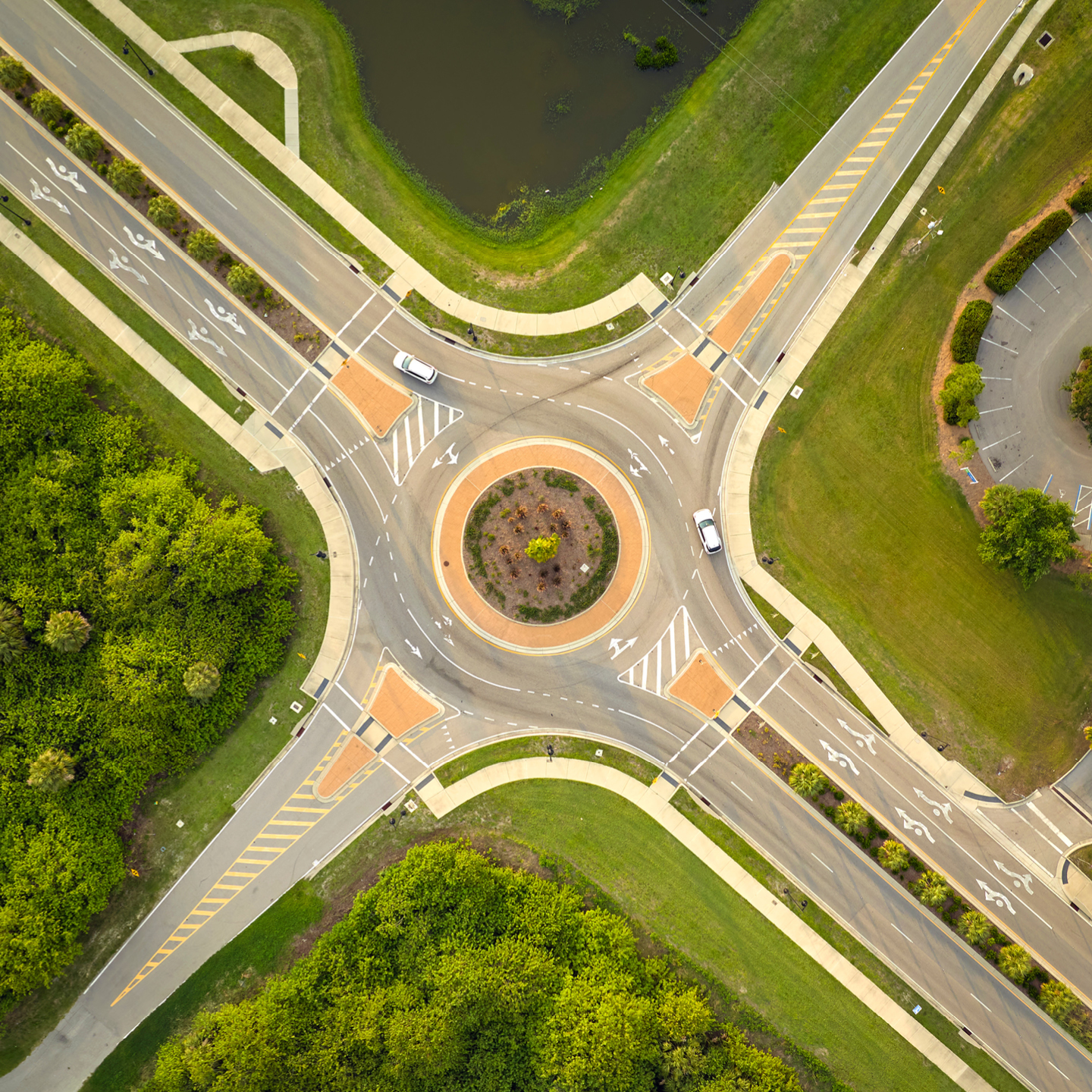
The Court rejected a request to reopen a dispute regarding construction of a new roundabout in Lorain County.
The Supreme Court of Ohio today rejected a request to reopen a dispute regarding the amount of money owed to Lorain County landowners whose road access was cut off to build a new roundabout.
In a unanimous per curiam opinion, the Supreme Court denied a request to require the city of North Ridgeville to pay additional compensation for real property taken near the intersection of State Route 83 and Chestnut Ridge Road for the construction of a roundabout.
In a previous jury trial, the city was ordered to pay Mark and Matthew Standen $700,800 as compensation for the property taken for the roundabout project.
The Standens sought a writ of mandamus from the Court to compel the city to commence a second appropriation proceeding in probate court, arguing that the roundabout completely cuts off driveway access to the property, and it has no value. The Standens estimated the property was worth $800,000 to $850,000 before the city decided to build the roundabout.
Owners Cleared Land for Commercial Development
In 2003, Mark Standen purchased a 2.67-acre property at the intersection of Chestnut Ridge Road and State Route 83, also known as Avon Belden Road. He tore down an existing home on the property and kept the land vacant to market it for commercial development. His brother, Matthew, later became a joint owner.
The property had unimpeded access to both roads, and no curb existed at any point along the property lines to either road. There was a driveway connecting Chestnut Ridge Road to the part of the property where the house previously stood.
In 2023, the city decided to build a roundabout at that intersection. North Ridgeville offered the Standens $236,400 for the portion of their property that the city would appropriate to construct the roundabout.
The city estimated that the fair market value of the portion of the land it was acquiring was $236,400 and that there would be no damage to the remaining property. The Standens rejected the offer.
Jury Decides Value of Landowner’s Property
After the rejection, the city used a “quick take” provision under R.C. 163.06(B) to take possession of the Standens’ land needed to build the roundabout. It then initiated a proceeding in Lorain County Probate Court to determine how much the Standens were owed for the land.
The city provided the court with construction plans indicating that the roadways near the roundabout would have a 6-inch curb. The plans did not show any curb-cut access to either State Route 83 or Chestnut Ridge Road from the portion of the Standens' property that remained after the partial taking.
An appraiser for the city valued the property at $700,800 before the partial taking for the roundabout. The appraiser valued the property for the roundabout at $236,400, the amount the city offered and the Standens rejected.
Using a value of $300,000 an acre, the city’s appraiser estimated the remaining value of the Standens’ land to be $464,000. The city maintained that the project would not diminish the value of the remaining land and that no further compensation beyond the $236,400 was owed.
The Standens’ appraiser also valued the land at $700,800 and agreed that the portion taken for the roundabout was worth $236,400. However, the Standens’ appraiser found the limited access would reduce the value of the remaining land to $154,800, which was $309,000 less than before the land was taken for construction. He calculated the amount the city owed to the Standens to be $546,000. The estimate was based on the property having access to Chestnut Ridge Road but not State Route 83.
Mark Standen argued at the trial that the city’s plans showed no roadway access for his remaining property. He estimated the property's value at between $800,000 and $850,000 when the city took the land for construction. He considered the property worthless and undevelopable because of the lack of roadway access.
A city engineer acknowledged that the city plans did not show a curb cut for the Standen property, but testified that this did not mean there would be no access after construction was completed. She explained that a property owner could request a curb cut from a preexisting driveway or apply for a permit to construct a driveway elsewhere on the property.
The jury awarded the Standens $700,800, the fair market value for the entire property as calculated by both appraisers.
The city sought a new trial, which the probate judge denied in June 2025. North Ridgeville appealed to the Ninth District Court of Appeals, which affirmed the trial court’s decision.
The Standens sought a writ from the Supreme Court in April 2025. They argued both appraisers valued the property based on their belief that some road access would exist. The Standens maintained that the property is landlocked and has no vehicular access. They asked the Court to compel North Ridgeville to initiate another proceeding for the total taking of their property and to have it valued as such.
Supreme Court Analyzed Taking Requirements
The Court explained that the U.S. and Ohio constitutions guarantee that private property will not be taken for public use without just compensation. Under Ohio law, the government entity taking private property must file an action in a probate court where the property is situated to have a jury determine how much the owner should be paid for the property being taken.
A property taking can be both the actual acquisition of land or the “deprivation” of the use of the premises. The Standens do not dispute they were paid just compensation for the property taken to construct the roundabout. However, they claim they were not fairly compensated for the deprivation of roadway access to their remaining property.
The Court noted that to seek a writ ordering the city to revisit the payment, the owners had to show they had no other legal option to pursue the issue. North Ridgeville argued the Standens had already raised the lack of roadway access in the appropriations proceeding conducted by the probate court and had been compensated for it.
The Court found the jury had a chance to assess any damages to the property, including the loss of roadway access, and did factor that into the value of the remaining property. The Court also noted that North Ridgeville appealed the decision to the Ninth District. If the Standens were unhappy about the amount awarded, they could have filed a cross appeal, the opinion stated.
The Court declined to order a second proceeding, finding that the Standens have exhausted their efforts to seek further compensation.
2025-0484. State ex rel. Standen v. North Ridgeville, Slip Opinion No. 2026-Ohio-3204.
Please note: Opinion summaries are prepared by the Office of Public Information for the general public and news media. Opinion summaries are not prepared for every opinion, but only for noteworthy cases. Opinion summaries are not to be considered as official headnotes or syllabi of court opinions. The full text of this and other court opinions are available online.
 PDF files may be viewed, printed, and searched using the free Acrobat® Reader
 Acrobat Reader is a trademark of Adobe Systems Incorporated.