
Ohio’s Newest Attorneys Sworn in at November Ceremonies
Legal leaders give guidance on building professional reputations
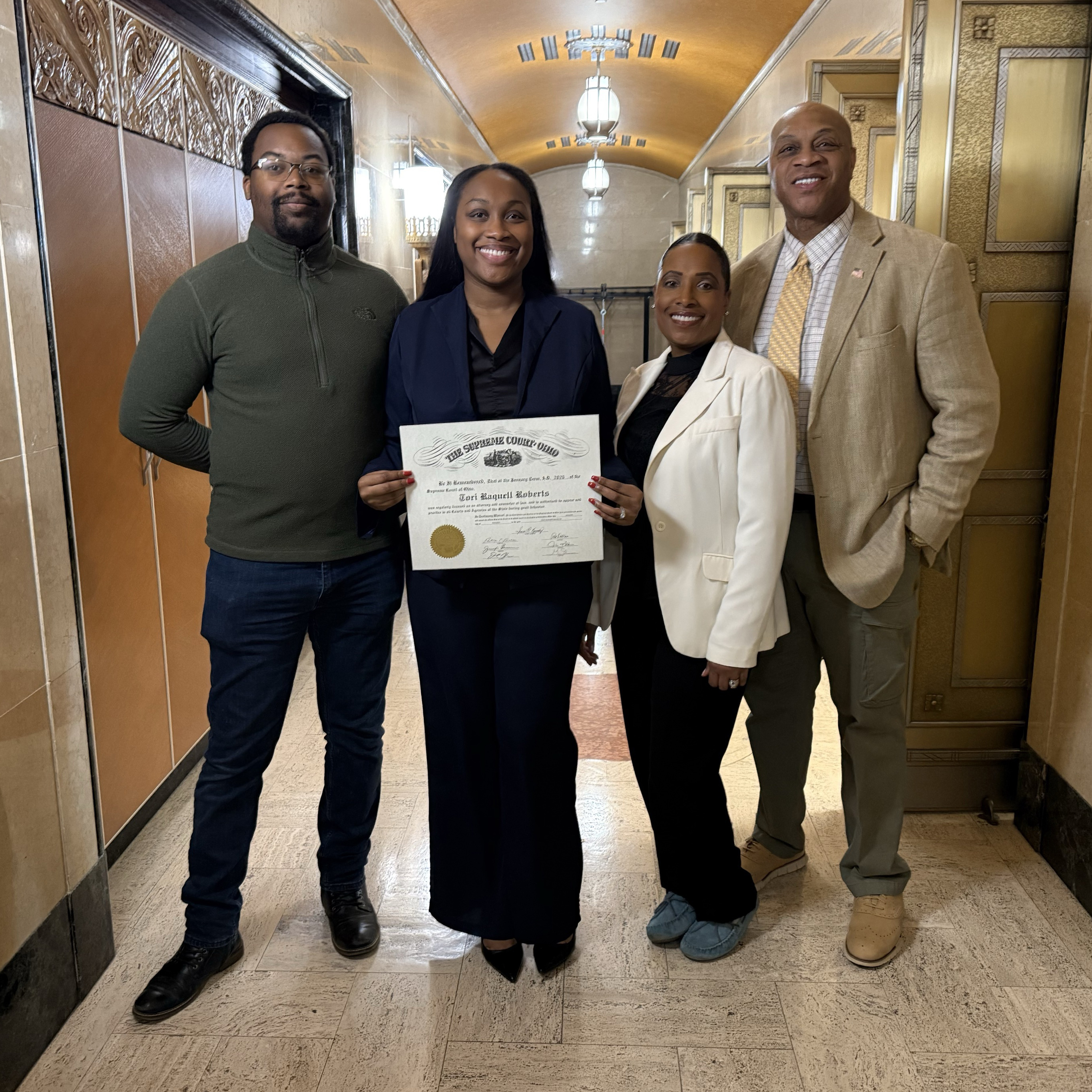
Pictured with her husband and parents, Tori Roberts begins her career as a first-generation lawyer working for the Licking County Prosecutor’s Office.
Ohio’s newest lawyers took their oaths of office during the November Admission to the Bar ceremonies at the Palace Theatre in downtown Columbus. The 633 attorneys who were sworn into the legal profession represent each of Ohio’s nine law schools, plus dozens of graduates from out-of-state law schools who want to practice law in Ohio.
Chief Justice Sharon L. Kennedy congratulated the new attorneys on reaching this milestone after years of hard work and preparation.
“This is a culmination of 20 years or more of formal education, but your education will continue every day of your professional life,” Chief Justice Kennedy told the new lawyers.
Giving Guidance to Next Generation
Leaders of the judiciary, professional legal organizations, and law schools shared their advice throughout the ceremonies. Each leader celebrated the new lawyers’ accomplishments but also charged them to take into account the seriousness of the oath and its many implications.
“The law is not simply a profession. It is a calling,” said Emily M. Janoski‑Haehlen, dean of the University of Akron School of Law. “You now have the opportunity and responsibility to use your education, your judgment, and your voice to advocate for others, uphold the principles of justice, and make a meaningful difference in your communities.”
During her keynote address, Justice Megan E. Shanahan left the new attorneys with several pieces of advice as they begin their careers: Remember the people behind each case, build a reputation people can trust, have the courage to exercise independent judgment, and make room for service.
She explained that while law school teaches students the skills to answer questions on tests, the questions clients have for attorneys are based on real-life concerns.
“What becomes routine to you may be the most consequential event in someone else's life. You may have handled a particular kind of hearing a dozen times. [But] your client may never have entered a courtroom before,” she said. “Take the extra minute. Explain the next step. Return the call. Make sure the person depending on you understands what you have said. Legal knowledge will help you identify the answer, but listening will help you understand the question.”
Justice Shanahan cautioned the new lawyers in the room that their legal reputations are shaped by every decision they make.
“Be the lawyer whose reputation a judge can rely upon. Be the colleague who follows through. Be the advocate who can argue forcefully without making every disagreement personal. And remember that an email can be drafted in anger, saved as a draft, and reconsidered after lunch,” she said.
Leaning on Experience
As they begin their careers, Justice Shanahan told the new lawyers they don’t have to have it all figured out right now. Instead, they can lean on the experience and expertise of seasoned attorneys to help guide them. She stressed the importance of relying on mentorship over new technology.
“Find experienced lawyers whose judgment you respect. Ask questions. Keep learning. Then, when your turn comes, offer that same generosity to someone just starting out,” she said. “It is these human interactions that bolster the reputation of our profession. Artificial intelligence cannot do that.”
Jan Allen Baughman, president of the Ohio State Bar Association, emphasized the importance of networking and mentorship as she encouraged the new attorneys to become involved in their local bar associations.
“Say yes to opportunities, invest in relationships, and never stop learning,” she told them. “You never know which conversation, mentor, volunteer opportunity, or invitation to serve will change the course of your career.”
New attorney Hannah May Schuetz celebrated with her family, including her father, who is also an attorney. Schuetz, who will begin her career with Procter & Gamble in Cincinnati, echoed Baughman’s advice.
“I was lucky enough to get a call a couple of weeks after the bar exam saying that they had a spot for me working with their beauty and skincare brands.”
She attributed her new opportunity to connections she made while at the University of Cincinnati College of Law.
“Take all the opportunities you can to meet people who are working in the city or the community that you want to work in,” said Schuetz. “I think I ended up with my job because of networking, because I maintained relationships with people at P&G after my first summer working there.”
Serving Those in Need
Justice Shanahan’s last piece of advice for the new attorneys was to give back if they can and help others navigate the legal system with their knowledge and skills.
“Some of the people who most need a lawyer will have the greatest difficulty finding one. Look for ways to put your skills within their reach. Take a pro bono matter. Help someone navigate an unfamiliar process. Volunteer in your community, or in any one of our rural communities that so desperately need your service,” she said.
Chief Justice Kennedy reiterated that call to action, pointing out that 6.5 million Ohioans live in counties that need more attorneys to assist with their legal needs.
“It is my greatest hope that among you are people who are willing to serve in the unrepresented areas of our state,” she said.
In the crowd was at least one new attorney ready to answer the call. Originally from Connecticut, Tori Roberts moved to Ohio to attend Capital Law School. As a law student, she met her husband and also fell in love with public service in one of Ohio’s underserved counties. After interning with the Licking County Prosecutor’s Office, she accepted a position as an assistant prosecutor in the civil division.
“I am enjoying working in a rural community. I think it’s important. There’s so much overpopulation and oversaturation with attorneys in bigger cities,” said Roberts. “I think rural communities need more prosecutors and public defenders and appointed counsel.”
She looks forward to beginning her law career and becoming the first attorney in her family.
“It’s surreal. I can’t even put it into words. I can’t even process it, but I am very excited,” she said.