Legal Legacy: Can Home Hair Perm Company Be Held Liable for Damages?
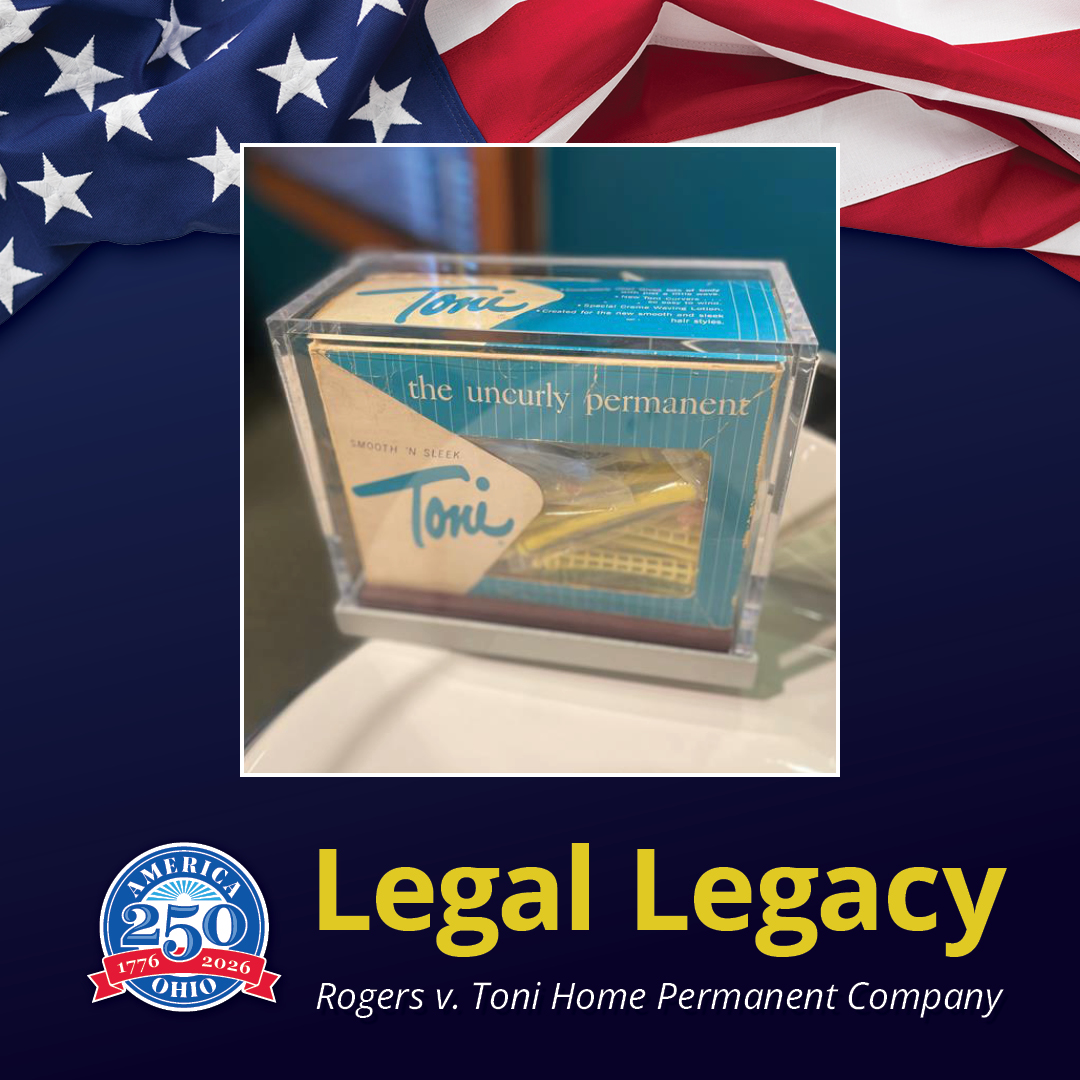
On this day in 1958, the Supreme Court ruled Toni Home Permanent Hair Co. was liable for damages to an Ohio girl’s hair.
In 1958, an Ohio girl and her mother purchased an at-home hair perm kit made by Toni Home Permanent Company. The product, labeled “Very Gentle,” was meant to give the girl’s hair a wave resembling popular salon styles of the time. However, as she removed the curlers, her hair began to fall out.
Despite carefully following the directions, the girl had lost most of her hair. Her mother sued the company for $30,000 in damages in Cuyahoga County Common Pleas Court. The court denied the mother’s claims, upholding the legal principle of privity which requires a direct contractual relationship between a consumer and seller in order to pursue legal action. Because the perm kit was purchased from a store — not directly from Toni Home Permanent — the company was found not liable for damages.
The common pleas court’s decision was later overturned by the Eighth District Court of Appeals. The appeals court ruled that because the manufacturer advertised product as safe, it could still be held liable without a direct contractual relationship.
The case was again appealed, this time to the Supreme Court of Ohio. In Rogers v. Toni Home Permanent Hair Co., the Court ruled that the manufacturer was liable for damages.
Writing for the majority, Justice Charles Zimmerman stated, “The warranties made by the manufacturer in his advertisements and by the labels on his products are inducements to the ultimate consumers, and the manufacturer ought to be held to strict accountability to any consumer who buys the product in reliance on such representations and later suffers injury because the product proves to be defective or deleterious.”
The court’s decision overturned the privity requirement and allowed legal action when an express warranty between a consumer and manufacturer is violated. In this case, the Court found the mother had the right to sue for personal damages to her daughter because the advertised safety of the product had been breached.
This case is one of several featured in the Visitor Education Center at the Thomas J. Moyer Ohio Judicial Center. The exhibits highlight the legal legacy of the Supreme Court of Ohio and are available to view during free public tours. To schedule a tour, call 614-387-9223 or email CourtTours@sc.ohio.gov.
America is preparing for its 250th birthday on July 4, 2026, the Supreme Court of Ohio is celebrating the semiquincentennial with a year-long celebration called “The Story of America" highlighting significant historical events. Beyond digital content, the celebration includes events and displays at the Court. The initiative aims to spark curiosity, enhance civic literacy, and honor key moments in American and Ohio history.