
Court Celebrates Sibling Success in Recovery
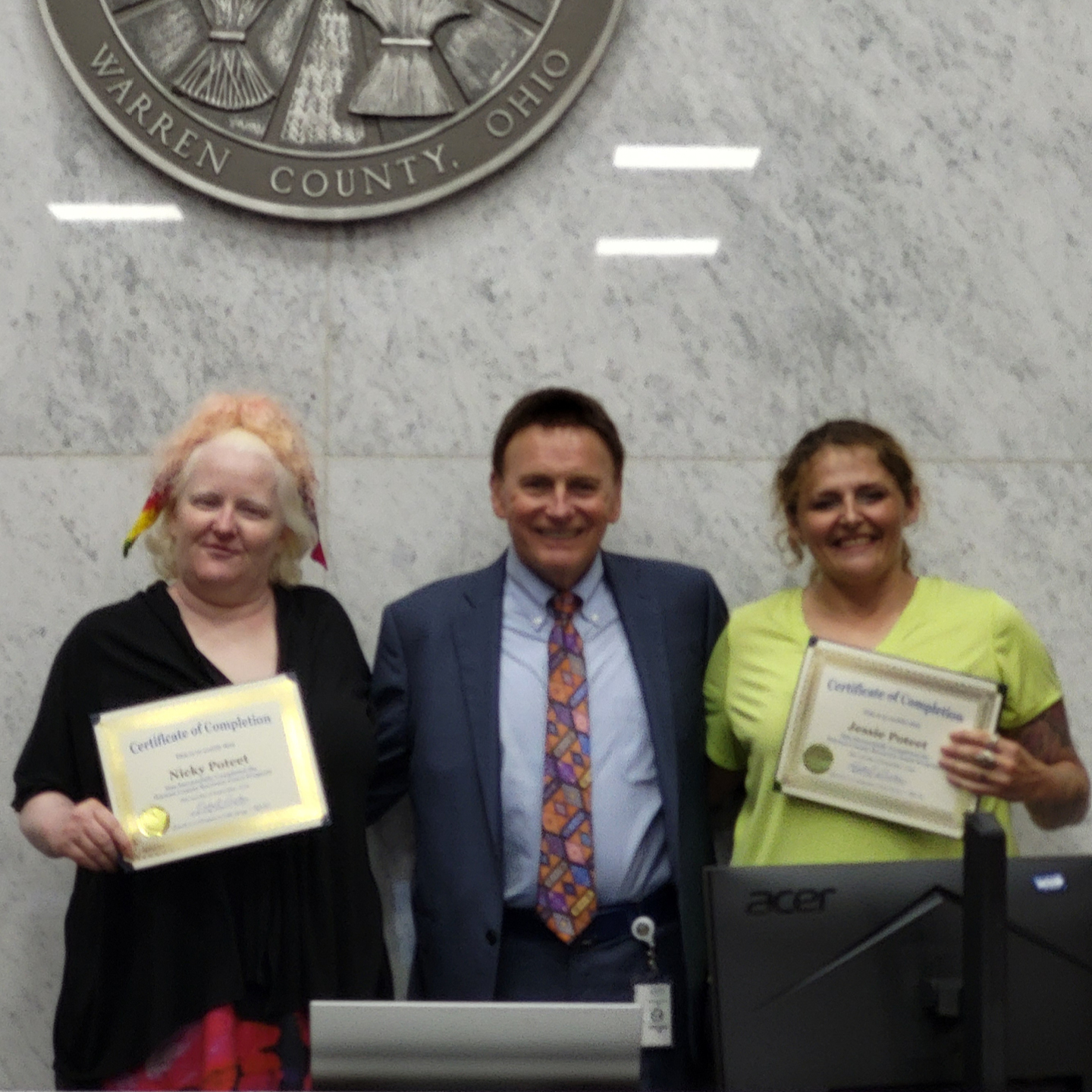
Judge Robert W. Peeler, who presides over a Warren County Common Pleas Court specialized docket, celebrates the graduation of two sisters who successfully completed the court’s program.
A Warren County Common Pleas Court specialized docket recently celebrated the graduation of two sisters who successfully completed the program together.
The specialized docket, called Recovery Court, found the occasion to be particularly impactful not only to the family, but to the specialized docket staff team who worked with them on their journey. During their time on the specialized docket, both women made significant progress in building stability and independence, the court reported.
For one sister, this was her first time in the program. She was able to obtain her own housing and secure employment. The other sister participated in the program six years ago, and successfully completed it. However, she returned to the specialized docket following a recurrence of justice-system involvement. Once again, she successfully completed the program and found housing and a job.
The court noted that the graduation was not only a time to celebrate the sisters, but also to recognize the continued work that recovery sometimes requires, and to acknowledge the opportunity treatment courts provide for people and families to rebuild their lives.
Recovery Court Part of State’s Innovative Efforts
The Warren County specialized docket is one of more than 200 certified specialized docket programs in Ohio. These dockets address substance use and mental health disorders among adults and children involved in the justice system. Some programs serve a broad range of participants, while others focus on specific groups in need, such as veterans, those affected by domestic violence or human trafficking, or individuals reentering their communities after incarceration.
To be certified, each court must adopt the Supreme Court’s research-based standards. Courts then tailor their dockets to the needs of their communities and participants. The goal is to serve individuals who need the most help and who demonstrate the highest risk of returning to the justice system. By treating the underlying causes of behavior rather than relying solely on punitive measures, specialized dockets help participants break harmful patterns and avoid future contact with courts, jail, or prison.
An array of information and resources about Ohio’s specialized dockets is available from the Supreme Court. Among the materials are a map of the specialized dockets to help Ohioans locate programs in their area and guidance to local courts on certifications, best practices, and training opportunities.
Courts are encouraged to share news of events, initiatives, programs, and other announcements with Court News Ohio. Ideas can be submitted to CNO@sc.ohio.gov.