
Appellate Judge Emphasizes Accessibility and Fairness in Law
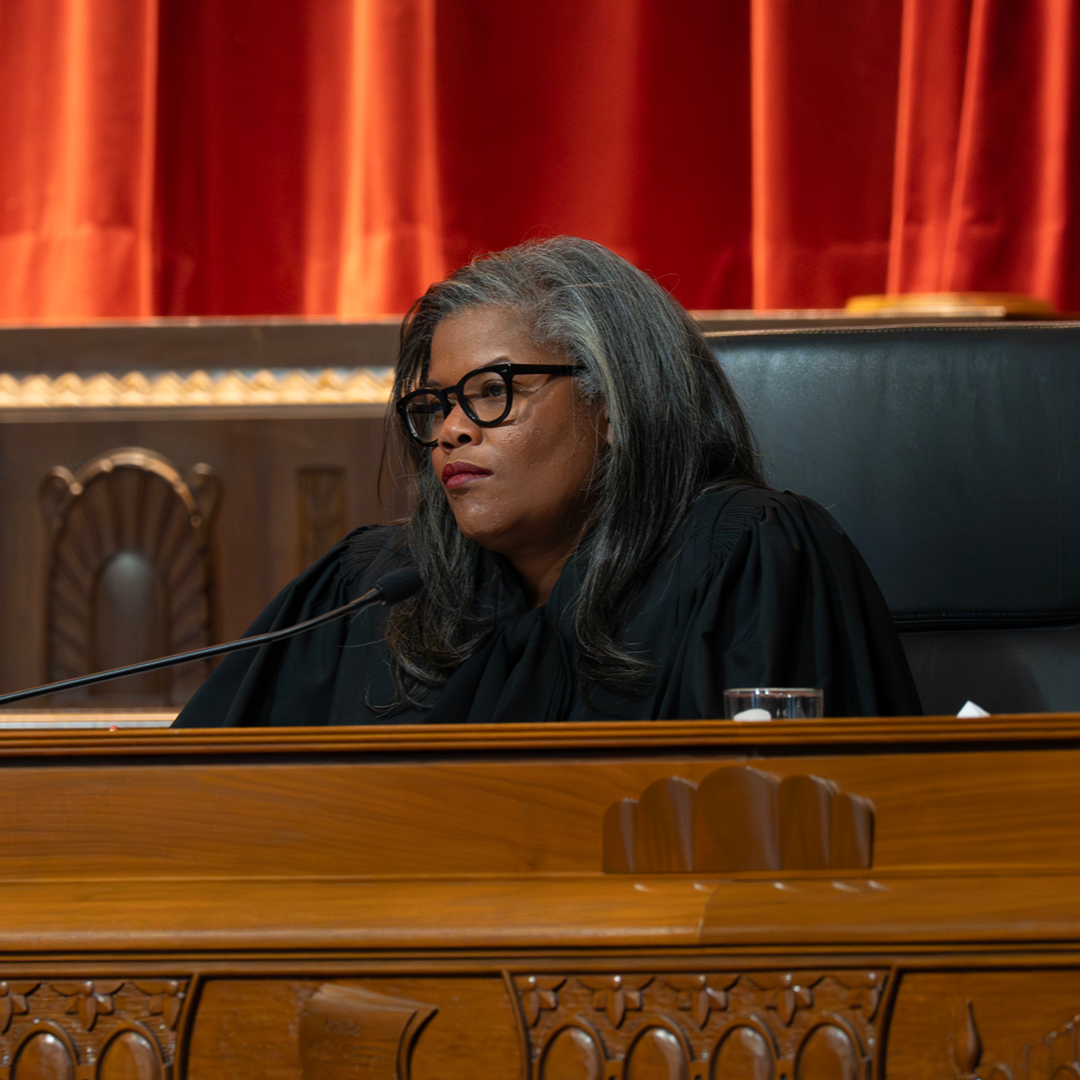
Judge Laurel Beatty Blunt from the Tenth District Court of Appeals hears a case at the Supreme Court.
“Sitting on the Supreme Court of Ohio is both humbling and energizing,” said Judge Laurel Beatty Blunt of the Tenth District Court of Appeals.
During last month’s oral arguments, Judge Beatty Blunt sat for Justice Joseph T. Deters, who recused himself, to hear In re OVEC Generation Purchase Rider Audit, Case No. 2024-1733.
The case questioned whether an audit required by the Public Utilities Commission of Ohio reasonably found $115 million in costs from coal-powered plants could be passed onto consumers of three utility companies. The Ohio Constitution allows the chief justice to appoint an appellate judge to hear a case when there is a recusal.
Describing her preparation for hearing the case, Judge Beatty Blunt said: “You study the briefs with an eye toward statewide impact and clarity. The questions are not just about resolving a dispute — they are about safeguarding the development of Ohio law.”
From Attorney to Trial and Appellate Judge
A Columbus native, Judge Beatty Blunt always aspired to a career centered around fairness and serving others.
After graduating from Spelman College and Vanderbilt University Law School, she found her start back in Ohio working for the Ohio Secretary of State’s Office before moving into private practice. In 2009, she made her transition from attorney to judge after being appointed to the Franklin County Common Pleas Court.
While working as a trial judge, she picked up valuable problem-solving skills.
“Trials are fast-moving human stories, and no two days look alike. That experience taught me that judging is not just about applying the law. It’s about problem-solving in a way that helps people move forward,” she said.
In 2018, she was elected to the Tenth District Court of Appeals, where she continues to serve.
Making Legal System Approachable and Fair
In the courtroom, Judge Beatty Blunt prioritizes accessibility and fairness for all.
“Courts should be accessible, understandable, and fair. Every person who walks into a courtroom deserves to feel heard and to understand why a decision was made, even if they disagree with the outcome,” she said.
She devotes herself to this mission by creating educational content on legal concepts and civic issues for the public.
“It’s designed to make the legal system more approachable for people who may never step foot in a courthouse.”
Judge Beatty Blunt’s commitment to serving her community and understanding the real people behind cases is evident through her work. From her time as a trial judge, her tenure as an appellate judge, and her recent assignment to the Supreme Court, she views each case with empathy and in pursuit of fairness and justice.
“As a judge, your responsibility expands to everyone in the courtroom including the parties, the lawyers, the witnesses, and the community that all depend on your decisions,” she said.