
Trial Court Could Deny New Trial Without Conducting Oral Hearing
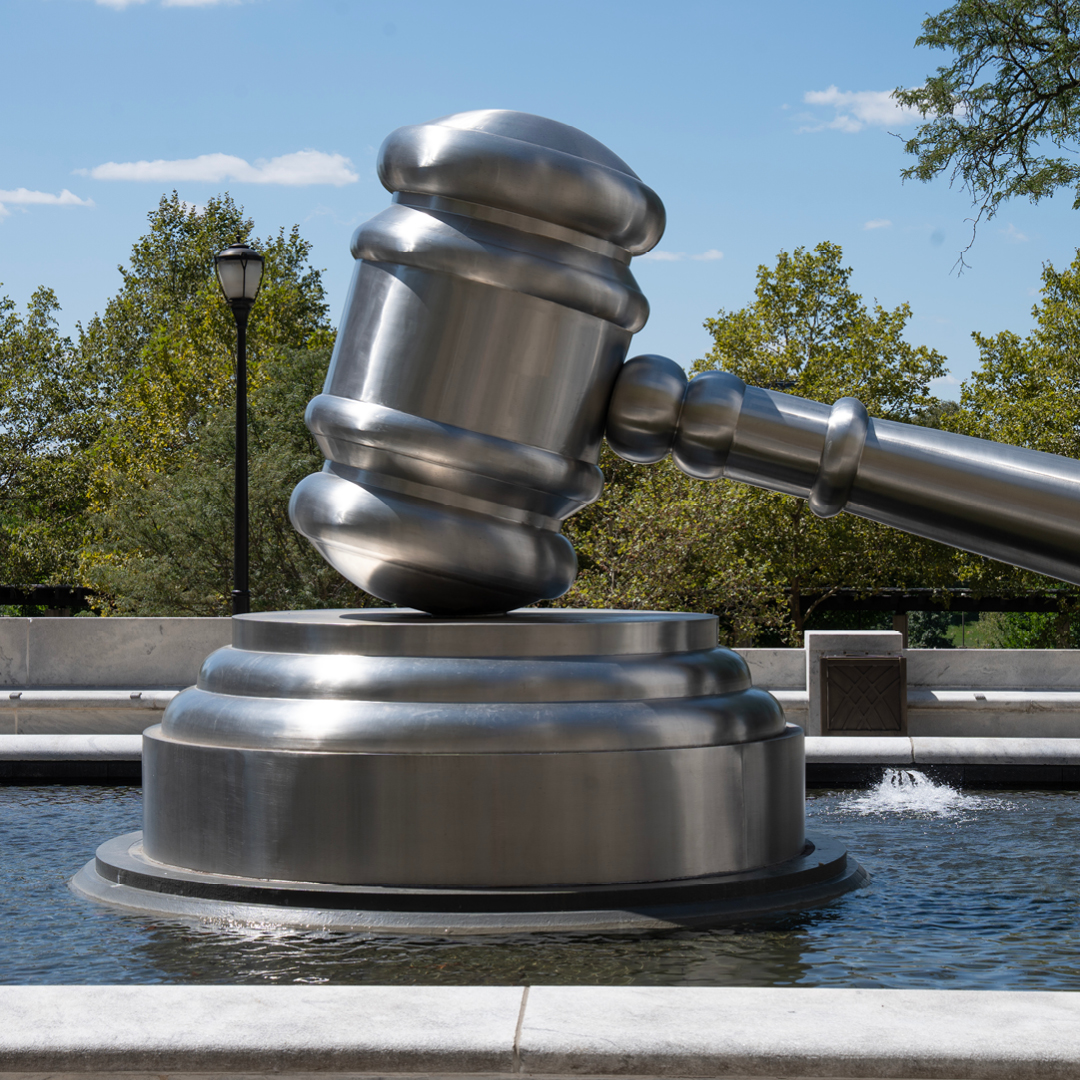
The Court ruled a trial court was not obligated to conduct an oral hearing on a man’s request for a new trial.
A trial court was not required to conduct an oral hearing before deciding whether to grant a Cleveland man’s request for a new trial based on newly discovered evidence, the Supreme Court of Ohio ruled today.
In a 6-1 decision, the Supreme Court found the Ohio Rules of Criminal Procedure gave a trial judge the discretion whether to hold an oral hearing to consider Hollis Bostick’s request for a new trial to overturn his 2003 conviction. A year after granting Bostick’s request to consider a motion for a new trial, the Cuyahoga County Common Pleas Court issued a summary entry denying the motion.
Writing for the Court majority, Justice Joseph T. Deters explained that in numerous instances the General Assembly has used the term “hearing” without defining it. When a hearing is not defined, the Court has left the nature of the hearing to the discretion of the trial court. Justice Deters noted that Bostick did not request an oral hearing when he requested the trial court grant him a new trial.
“One would be hard-pressed to conclude that a trial court abused its discretion when it declined to hold an oral hearing that was never requested,” Justice Deters stated.
Chief Justice Kennedy and Justices Patrick F. Fischer, R. Patrick DeWine, Daniel R. Hawkins, and Megan E. Shanahan joined the opinion
In a dissenting opinion, Justice Jennifer Brunner wrote that by simply issuing an entry denying the new trial, the trial judge did not indicate whether an evidentiary hearing occurred at all.
“The record before us bears no indication of how the trial court made its determination to deny the motion for a new trial. As is demonstrated in this case, the practice of summarily denying such motions is arbitrary and unreasonable, and a trial court abuses its discretion when its decision is arbitrary and unreasonable,” she wrote.
Shooting Victim Named Assailant At Trial
In 2003, Bostick was found guilty by a jury of the felonious assault and attempted murder of Tommie Griffin. During the trial, Griffin testified that as he was leaving a restaurant, he saw Bostick and Lonnie “Bud” McCann approaching. Griffin was affiliated with a gang, and Bostick and McCann were affiliated with a rival gang. According to Griffin, he heard Bostick make a derogatory comment about him and saw that Bostick had a gun in a sling he was wearing on an injured right arm.
Griffin stated he started running when Bostick took the gun from his sling and that Bostick chased him and shot him multiple times.
McCann testified that he and Bostick were talking to three women outside the restaurant when Griffin appeared. McCann said he saw Bostick shoot Griffin. One of the women also testified she saw Bostick shoot someone. McCann was arrested 30 minutes after leaving the restaurant because his car was identified as being related to the shooting, but he was never charged with the shooting. Eventually, Bostick was charged with shooting Griffin.
During the trial, Bostick’s defense attorney suggested to the jury that McCann was the shooter. Nevertheless, Bostick was convicted on all counts and sentenced to consecutive prison terms. Bostick appealed to the Eighth District Court of Appeals, which affirmed his convictions in 2004 but ordered the trial court to resentence him because of procedural errors. The trial court sentenced Bostick to 20 years in prison.
Police Withheld Report of Other Suspect
In 2021, Bostick obtained a previously undisclosed police report created shortly after the shooting. According to the report, while in the hospital being treated for his injuries, Griffin initially identified McCann, not Bostick, as the shooter.
Bostick wanted to seek a new trial based on the police report. Because he was seeking a new trial more than 180 days after the jury verdicts, he was required to seek permission of the trial court to file the motion for a new trial. Attached to his motion for leave was a copy of the police report and an affidavit from his trial attorney. The attorney stated that had he known that Griffin originally identified McCann, he would have presented that to the jury.
The trial court granted Bostick leave to file a motion for a new trial, and Bostick filed his motion, again attaching the police report and his trial attorney’s affidavit. The Cuyahoga County Prosecutor’s Office opposed granting a new trial. Over a year later, the trial court denied the motion.
Bostick appealed to the Eighth District, arguing that his rights under the U.S. and Ohio constitutions were violated when the trial court summarily denied his motion without a hearing. The Eighth District affirmed the trial court’s decision, finding that disclosure of the police report did not create a strong possibility that a different result would have been reached had the jury known about it.
Supreme Court Analyzed Hearing Requirement
Justice Deters explained Bostick’s brief presented to the Supreme Court devoted a large portion to challenging the Eighth District’s reasoning for discounting the importance of the newly discovered police report. However, the sole challenge Bostick presented to the Supreme Court was whether the trial court was required to conduct an evidentiary hearing on his motion for a new trial, he wrote.
Criminal Rule 33 allows a defendant to seek a new trial based on newly discovered evidence. The rule states, “When a motion for a new trial is made upon the ground of newly discovered evidence, the defendant must produce at a hearing on the motion, in support thereof, the affidavits of the witnesses by whom such evidence is expected to be given.” If the defendant needs more time to obtain affidavits, the court “may postpone the hearing of the motion for such lengths of time as is reasonable under all the circumstances,” the opinion explained. The prosecutor is permitted to provide contrary affidavits or other evidence.
While the rule states an “evidentiary hearing” is required, Bostick argued the trial court is required to hold an oral hearing during which a defendant may call witnesses.
The opinion stated that the rule does not require an oral hearing. Citing its 2008 Pruszynski v. Reeves decision, the Court noted that an evidentiary hearing involves the “presentation of evidence by affidavits, depositions, or other documents.” The Court stated that Rule 33 refers to producing affidavits of witnesses, not producing the witnesses themselves for a hearing. And it allows the state to respond with affidavits and other evidence.
“The language used in the rule indicates that in the ordinary course, motions for a new trial based on newly discovered evidence will be determined through nonoral, evidentiary hearings,” the opinion stated.
Justice Deters acknowledged the Court has not always precisely described the type of hearing required by Rule 33. Today’s decision clarified that while an evidentiary hearing – one in which the trial court considers affidavits or other sworn statements – is required, the decision to hold an oral evidentiary hearing is left to the discretion of the trial court. The Court affirmed the Eighth District’s decision denying Bostick a new trial.
No Proof of Evidentiary Hearing, Dissent Maintained
In her dissent, Justice Brunner explained that while the rule is not specific about the particular procedures the trial court must follow, defendants are entitled to careful consideration of their claims and a full opportunity to present relevant facts. When a trial court summarily denies a motion, the Court cannot presume a hearing was held, let alone an evidentiary hearing, she wrote.
The Court has previously cautioned against summary denials, she noted, and has stated that trial courts should make findings of fact and conclusions of law when denying a motion for a new trial. In Bostick’s case, the trial court should have conducted an oral hearing, or at the very least it should have specified in its entry, the date and time it held the nonoral hearing and reviewed the evidence in the case, the dissent stated.
Justice Brunner wrote that the Eighth District gave little weight to the undisclosed police report compared to the victim’s testimony at trial that Bostick shot him.
“The appellate court did not consider that the victim’s initial identification of the shooter close in time to the incident carries a presumption of reliability over this later identification,” the dissent stated.
Bostick presented substantive grounds for a new trial, she wrote, and the trial court should have conducted a full hearing to determine the importance of the undisclosed evidence, she concluded.
2024-0458. State v. Bostick, Slip Opinion No. 2025-Ohio-5559.
 View oral argument video of this case.
Please note: Opinion summaries are prepared by the Office of Public Information for the general public and news media. Opinion summaries are not prepared for every opinion, but only for noteworthy cases. Opinion summaries are not to be considered as official headnotes or syllabi of court opinions. The full text of this and other court opinions are available online.
 PDF files may be viewed, printed, and searched using the free Acrobat® Reader
 Acrobat Reader is a trademark of Adobe Systems Incorporated.