
Homeowners Association Can Appeal Water Drainage Improvement Plan
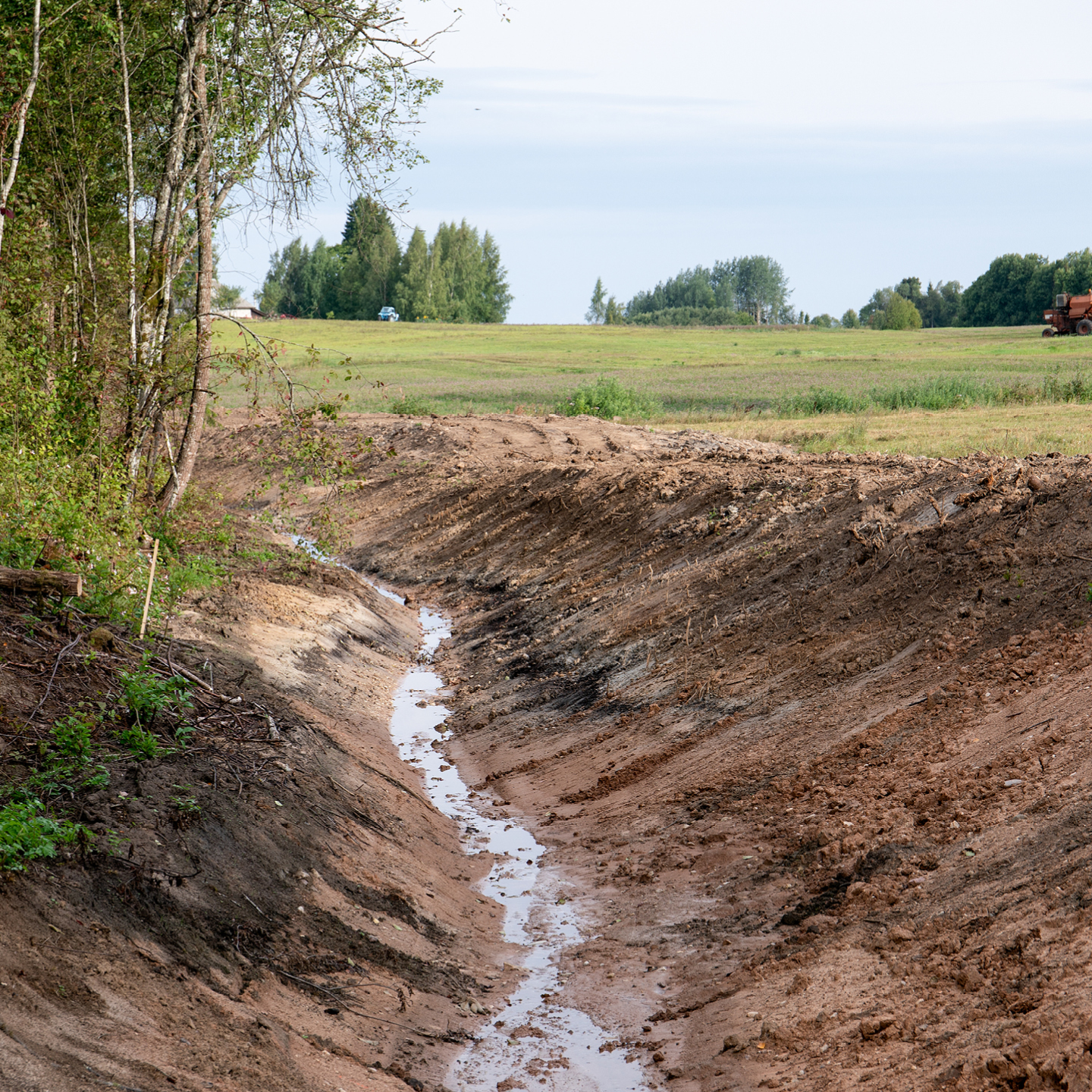
A homeowners association can challenge a water drainage improvement project after county commissioners voted to move forward with the plan.
A Licking County homeowners association can challenge a proposed $3.2 million water drainage improvement project after county commissioners from Licking and Franklin counties voted to move forward with the plan, the Supreme Court of Ohio ruled today.
In a unanimous decision, the Supreme Court held that the Colt’s Neck Homeowners Association could appeal a multicounty ditch improvement plan after the first hearing held by county commissioners on the matter. The Court rejected the proposition that the landowners' lawsuit was premature because the project had not reached the point where plans had been prepared and potential assessments had been calculated.
Writing for the Court, Chief Justice Sharon L. Kennedy explained that under R.C. Chapter 6133, any affected landowner may appeal to the court of common pleas any order issued by a joint board of county commissioners. The decision affirmed the Tenth District Court of Appeals, which allowed Colt’s Neck to appeal the joint board’s order to move forward on the petition to improve Cole Ditch.
Landowner, Township Seek Drainage Changes
Cole Ditch flows through Licking and Franklin counties before draining into Blacklick Creek. The watershed spans 1,132 acres, with 894 acres in Franklin County and 238 acres in Licking County. The area includes 341 parcels of land in Franklin County and 70 parcels in Licking County.
In April 2023, landowner Julie Dockter and the Jefferson Township Board of Trustees petitioned the Franklin County Board of Commissioners to improve the water drainage of Cole Ditch to alleviate stormwater flooding. The petition maintained that the improvement was necessary, would benefit the petitioning landowners, and would be conducive to the public welfare.
The Franklin County Engineer’s Office prepared a report that included a preliminary cost estimate and a cost-benefit analysis of the proposed ditch improvement. It conducted two informational meetings, and it served notice of the proposal to landowners whose parcels were within the Cole Ditch watershed. Landowners within the watershed would be assessed the costs of the improvements.
The engineer's office notified 89 of the 104 members of Colt’s Neck whose property is within the watershed.
R.C. Chapter 6131 governs ditch improvements, and R.C. Chapter 6133 covers joint-county ditch improvements for ditches that span multiple counties. The law required a joint board of commissioners from Franklin and Licking counties to consider the ditch improvement.
Colt’s Neck asked the joint board to dismiss the petition, arguing that some of its landowner members had not been given notice of the petition. While those landowners may not have owned property in the watershed, Colt’s Neck contended, they are members of the homeowners association, and Colt’s Neck has common areas within the watershed. All of its members would be affected by the change since the improvements to the common areas would be assessed to all Colt’s Neck landowners, the association asserted.
At the first hearing on the proposal, the joint board denied Colt’s Neck's motion to dismiss the petition. A representative of the county engineer’s office testified that the improvements would include clearing obstructions, reshaping the ditch area, and installing pipes and culverts. She estimated the cost at $3,228,000. The project costs would be assessed to the local governments and the 411 residents owning property within the watershed.
The county engineer’s office recommended proceeding with the project. The joint board received public comment from landowners, who overwhelmingly opposed the ditch improvements. The board approved a resolution finding the ditch improvements necessary, conducive to the public welfare, and with benefits that outweighed the costs. The board ordered the engineer to proceed with preparing the reports, plans, and schedules needed for the improvements.
Association Challenges Plan in Two Courts
Colt’s Neck appealed the joint board’s decision to the Licking County Common Pleas Court, alleging that the board failed to give proper notice to some affected landowners, that the first hearing was not fair, and other claims. About two hours later, Colt’s Neck filed a similar appeal in Franklin County Common Pleas Court. Both courts dismissed the appeals. Colt’s Neck appealed both dismissals to the respective courts of appeals.
The Fifth District Court of Appeals dismissed the appeal of the case filed in Licking County. The Tenth District Court of Appeals reversed the judgment of the Franklin County Common Pleas Court and ordered it to conduct further proceedings.
The two county commissions and the Franklin County Engineer appealed the Tenth District’s decision to the Supreme Court. The Tenth District concluded that its decision conflicts with the Fifth District, and the Supreme Court agreed to consider the appeal and address the conflict.
Supreme Court Reviewed Right to Appeal Ditch Improvement Order
Initially, the Court asked the parties to brief the question whether the “jurisdictional-priority rule” precluded the Tenth District from hearing the appeal by Colt’s Neck from the Franklin County Common Pleas Court since Colt’s Neck had first filed an appeal from the joint board’s order in the Licking County Common Pleas Court. The Supreme Court concluded that the jurisdictional-priority rule did not preclude the case from proceeding in Franklin County, because that rule does not involve the constitutional or statutory powers of the trial court to render a valid judgment.
The laws governing ditch improvements in a single county are set forth in R.C. Chapter 6131. Many of the provisions are extended to R.C. Chapter 6133, which governs multicounty ditch improvements. Chief Justice Kennedy explained that both chapters had to be considered to determine whether the Colt’s Neck homeowners could appeal the joint board’s decision after the board’s first hearing.
R.C. 6131.11(A) provides that after the first board hearing, the board must vote on whether to proceed with a project survey and design for the proposed improvement or to dismiss the petition. If the board votes to proceed, the engineer in the county with the largest amount of ditch area to be improved must prepare reports and plans for the improvement. The engineer must also prepare schedules of the potential assessments to landowners, as well as calculate “damages” to property that will be taken by the government to improve the ditch.
When an order on a petition for a joint-county ditch is appealed, the law requires a panel of judges, one from each of the affected counties, to consider every issue except claims for compensation and damages. The financial claims are appealed to the court in the county in which the affected owner’s land is located. Because Colt’s Neck’s appeal did not involve claims for compensation or damages as contemplated by the statute, a panel of judges from each county should have been convened, the court stated.
The law expressly provides an affected landowner with the right to appeal a dismissal of a petition after the first hearing, the opinion noted. But it does not provide an express right to appeal an order to proceed.
The Court pointed out that another statute, R.C. 6131.25(A), is a “catch-all appeals provision,” and when read in conjunction with R.C. 6133.03(B), it provides that any affected landowner may appeal any order issued by the joint board.
“The General Assembly plainly meant what it said when it provided for an appeal from any order of a joint board of county commissioners. Consequently, any affected landowner may appeal a joint board’s order directing a county engineer to proceed with preparing reports, plans, and schedules needed for a proposed joint-county ditch improvement,” the opinion explained.
Court Determined Association Is Affected Landowner
To decide whether Colt’s Neck had standing to appeal a joint board decision under R.C. 6131.25(A), the Court considered whether Colt’s Neck met the definition of an “affected landowner.” The word “affected” is not defined in the ditch improvement statutes, the opinion said, but the Court looked at how the word is used throughout those statutes to discern its meaning.
“From the repeated uses, the word 'affected' as it appears in R.C. 6131.25(A) refers to someone or something being impacted by the proposed changes to the ditch,” the Court stated.
Colt’s Neck and its landowners are affected by the proposed changes and had asserted that their rights were violated at the first hearing, the opinion noted. The association had standing to pursue the case in common pleas court after the first hearing, and the law allowed it to appeal any order of the joint board, including the order directing the engineer to proceed, the Court concluded.
2025-0693 and 2025-0980. Colt’s Neck Homeowners Assn. v. Franklin Cty. Bd. of Commrs., Slip Opinion No. 2026-Ohio-2751.
 View oral argument video of this case.
Please note: Opinion summaries are prepared by the Office of Public Information for the general public and news media. Opinion summaries are not prepared for every opinion, but only for noteworthy cases. Opinion summaries are not to be considered as official headnotes or syllabi of court opinions. The full text of this and other court opinions are available online.
 PDF files may be viewed, printed, and searched using the free Acrobat® Reader
 Acrobat Reader is a trademark of Adobe Systems Incorporated.