
Worker Proved Dairy Farm’s Removal of Farm Equipment’s Safety Guard Led to Injuries
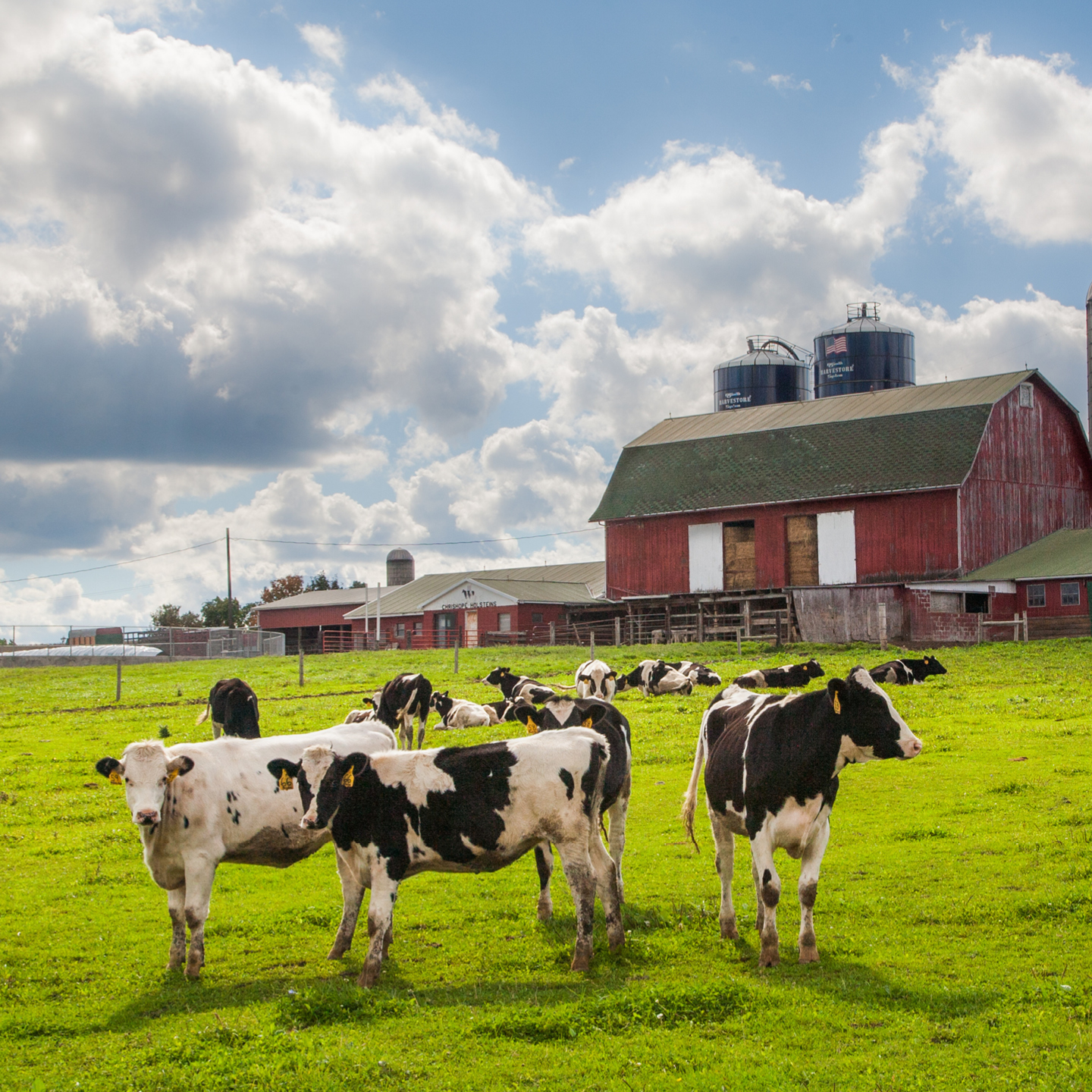
The Court found a dairy worker provided enough evidence to claim his injuries were caused by a piece of farm equipment missing its safety guards.
A dairy worker did not have to prove that his employer never intended to repair or replace damaged farm equipment in order to claim his injuries were caused by a part missing its safety guards, the Supreme Court of Ohio ruled today.
A Supreme Court majority found the Twelfth District Court of Appeals wrongly overturned a $1.9 million jury award to Jose Camara. Camara worked for Gill Dairy in Madison County and was severely injured in an April 2019 accident. Citing R.C. 2745.01(C), Camara argued he could sue his employer if he could prove deliberate removal by an employer of an equipment safety guard.
While a jury sided with Camara, the Twelfth District found Camara had to prove Gill Dairy both deliberately removed the guards and made a considered decision not to replace them.
Writing for the Court majority, Justice Jennifer Brunner stated that under the law, Camara was entitled to a presumption that his employer intended to harm him by removing the safety guards, and the dairy had to provide evidence to refute the claim. The text of R.C. 2745.01(C) states that Camara only had to offer evidence of an employer’s “deliberate removal” of equipment safety guards.
“No more and no less is required,” she wrote.
Chief Justice Sharon L. Kennedy and Justices R. Patrick DeWine, Joseph T. Deters, Daniel R. Hawkins, and Megan E. Shanahan joined Justice Brunner’s opinion. Justice Patrick F. Fischer also joined the opinion, except for one section concerning the appeals court’s review of the case.
Sand Spreader Accident Leads to Lawsuit
Camara began working as a farm laborer for Gill Dairy in 2017. The company owned a sand spreader, which operated by being connected to a tractor. The spreader had a power take-off (PTO) shaft equipped with a hydraulic motor that drives it, allowing the spreader to distribute sand.
To protect users and bystanders from the hazards of the rapidly rotating shaft, the PTO shaft is supposed to have safety guards on it. Camara said the Gill Dairy sand spreader did not have guards when he used it in April 2019.
Camara was inspecting the spreader that day and noticed an oil leak. He turned off the spreader to look for the leak, but could not identify the source. He turned it back on to investigate further, and a piece of his clothing got caught on the unguarded shaft. The rotating shaft threw him over the shaft to the other side of the tractor. He suffered severe and permanent injuries to his legs and left shoulder.
Camara filed an intentional tort lawsuit against his employer in Madison County Common Pleas Court, arguing the dairy acted with intent to injure him or with the belief that the injury “was substantially certain to occur.”
Employer Seeks to Dismiss Case
The dairy requested summary judgment from the trial court, arguing that Camara could not prevail in his lawsuit because he had not provided any evidence that the dairy intended to cause his injury. Additionally, the dairy maintained that there was only evidence that it failed to repair or replace the safety guards that may become detached from routine use. The fact that the guards were not replaced is not sufficient evidence to establish “deliberate removal” of the safety equipment, which Camara was required to prove, the company maintained.
The trial court denied the motion, finding there was a genuine issue of material fact that should be presented to a jury.
During the jury trial, the evidence indicated Gill Dairy purchased the sand spreader in 2011, and it included two safety guards. One guard covered the spinning shaft, and the other covered the coupling where the shaft connects to the gearbox. The manufacturer put warnings near the shaft stating “Danger, Entanglement Hazard” and “Keep Guards in Place.”
The jury heard the dairy hired a company in 2016 to replace a pump on the spreader. Because the pump was near the coupling guard, the guard was removed and was supposed to be put back in place. A video of the spreader Camara took in March 2018, a year before the accident, showed the coupling guard was missing as was half the shaft guard. Camara said that was the condition of the guards since he began working at the dairy, and he stated he expressed concerns to one of the two dairy owners about the guards.
A report from an Occupational Safety and Health Administration (OSHA) investigator found the coupling guard was not present on the sand spreader, and that caused Camara’s injuries. The co-owner could not recall when repairs to the spreader were made or when the guard was removed. He stated the shaft had been without the guard for as long as he could remember.
Another accident investigator reported that the dairy obtained a quote in January 2019 for a new PTO shaft for the sand spreader. The investigator asked for proof of purchase of a new shaft, and the dairy provided the copy of the quote with the word “quote” removed to make it appear as if the company actually purchased the new shaft.
The jury awarded Camara $1.9 million in damages.
Gill Dairy appealed to the Twelfth District, arguing that the case should not have gone to trial because the trial judge should have dismissed it before trial when the company requested summary judgment. The Twelfth District agreed and vacated the jury’s verdict .
Camara appealed to the Supreme Court. The Twelfth District also acknowledged its decision on what an injured employee must prove regarding repair and replacement of safety equipment conflicted with a Third District Court of Appeals decision. The Supreme Court agreed to address the conflict and Camara’s claim.
Supreme Court Analyzed Injury Proof Requirements
Justice Brunner explained that the Twelfth District analyzed the case by reviewing the evidence presented at the pretrial stage, when the dairy sought summary judgment. She wrote that once the trial court ruled that the matter had to be considered by a jury, the case had to be reviewed based on all the evidence presented at the trial.
The appeals court determined that Camara could not prove that his injuries were caused by the deliberate removal because, prior to trial, there was only evidence that someone had removed the safety guards, and there was no proof that the owners deliberately removed them or made the considered decision not to replace them.
The Supreme Court stated that was the wrong standard, and that Camara only had to show that the company deliberately removed the guards. Additionally, Camara could prove his case using both direct and circumstantial evidence presented at trial.
“From our review of the record developed at trial, we conclude sufficient evidence existed to enable reasonable members of the jury to conclude that Gill Dairy deliberately removed the sand spreader safety guards,” the opinion stated.
While the evidence may not have been indisputable, the opinion noted, a jury could reasonably believe that the guards were deliberately removed, and the investigator's report of the altered quote that made it appear that the company purchased a new PTO shaft could lead a jury to believe the company was aware of the deficiencies of the shaft that injured Camara.
The Court remanded the case to the Twelfth District to consider Gill Dairy’s other objections to the trial court judgment.
2023-1599 and 2024-0064 Camara v. Gill Dairy LLC, Slip Opinion No. 2026-Ohio-3056.
 View oral argument video of this case.
Please note: Opinion summaries are prepared by the Office of Public Information for the general public and news media. Opinion summaries are not prepared for every opinion, but only for noteworthy cases. Opinion summaries are not to be considered as official headnotes or syllabi of court opinions. The full text of this and other court opinions are available online.
 PDF files may be viewed, printed, and searched using the free Acrobat® Reader
 Acrobat Reader is a trademark of Adobe Systems Incorporated.