
Court Upholds Death Penalty for Triple Homicide
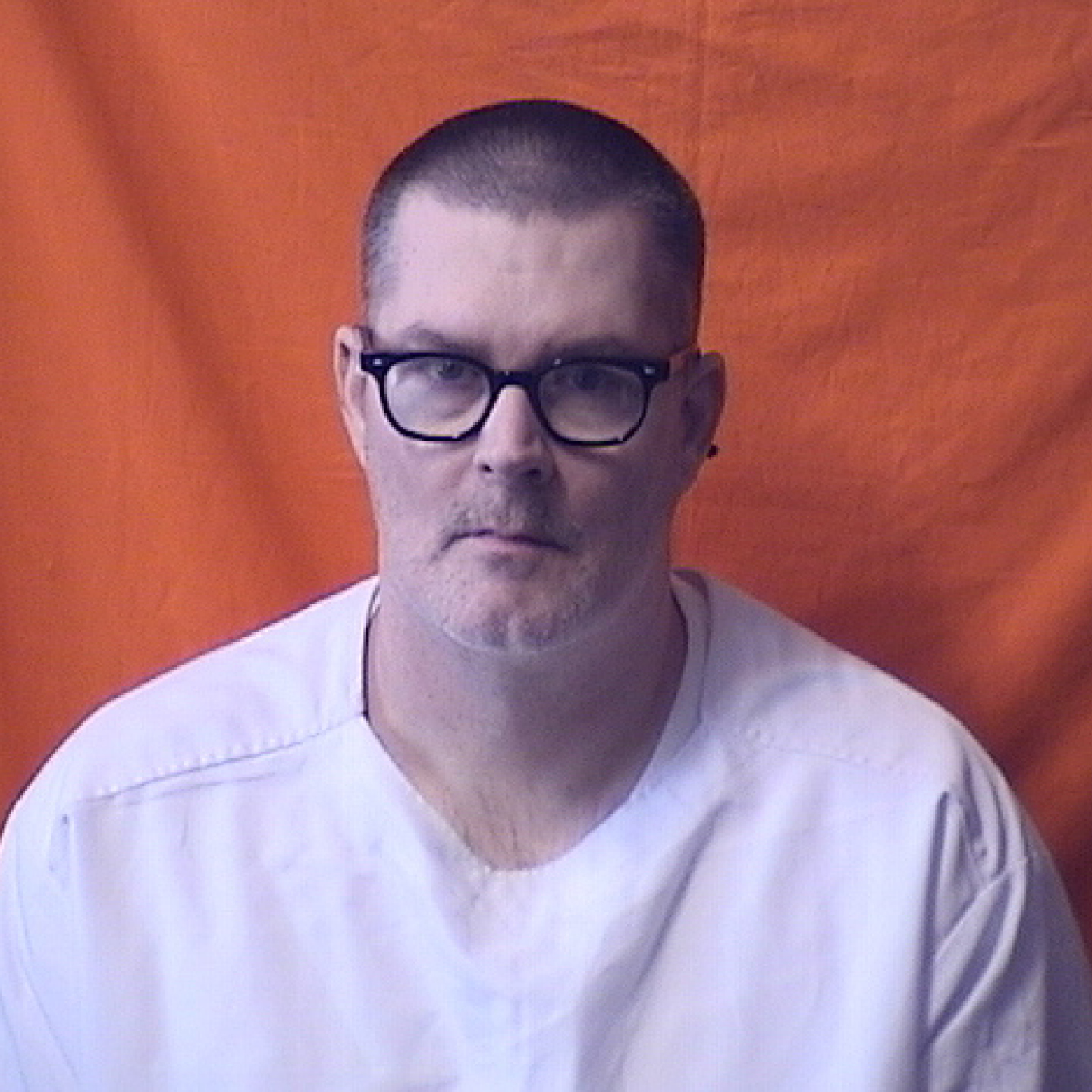
George Brinkman Jr.
The Supreme Court of Ohio today affirmed the death sentence of a man who killed his friend and her two daughters in their North Royalton home in June 2017.
A Supreme Court majority ruled that a Cuyahoga County three-judge panel properly considered the evidence and circumstances and sentenced George Brinkman Jr. to death after he pleaded guilty to murdering Suzanne Taylor and her daughters, Taylor and Kylie Pifer.
A three-judge panel first accepted Brinkman’s guilty pleas to the crimes in 2018 and sentenced him to death. However, on appeal, the Supreme Court vacated the convictions, finding the panel failed to advise Brinkman at the time he entered his guilty pleas that he was waiving his rights to confront the witnesses against him and to have the state prove his guilt beyond a reasonable doubt. The case was remanded to the Cuyahoga County Common Pleas Court for a new proceeding.
In November 2022, Brinkman again pleaded guilty to the crimes, and a new three-judge panel imposed the death penalty. Today, the Court rejected 22 objections, or propositions of law, Brinkman made to his convictions and sentence.
Writing for the Court majority, Justice Patrick F. Fischer stated the Court independently reviewed the aggravating circumstances and mitigating factors when considering Brikman’s sentence. The Court concluded that the aggravating circumstances “undeniably outweigh” the mitigating factors beyond a reasonable doubt.
“Brinkman murdered Suzanne and her two daughters in their home, to which he had gained entry under the pretext of his longtime friendship with Suzanne,” Justice Fischer wrote. “After brutally murdering the three women, he fled the scene, and he was taken into custody only after a dramatic eight-hour standoff that placed his friend, as well as law-enforcement officers, in danger.”
Chief Justice Sharon L. Kennedy and Justices R. Patrick DeWine, Joseph T. Deters, Daniel R. Hawkins, and Megan E. Shanahan joined the opinion.
Justice Jennifer Brunner concurred in part and dissented in part with the majority opinion. Justice Brunner wrote that she would hold that the three-judge panel abused its discretion when it declined to qualify the two doctors as experts in the fields of pharmacology and neuropsychology. She stated that the three-judge panel’s primary objection was to the substance of what the doctors said and not how they reached their medical conclusions. She stated that the three-judge panel abused its discretion in affording no weight to the doctors’ conclusions that Brinkman’s mental state was significantly impaired at the time of the murders.
Noting the panel’s additional reasoning that the doctors had only reviewed Brinkman’s records and not personally examined him, Justice Brunner cautioned that the majority opinion would disrupt the well-settled practice of allowing expert witnesses to base opinions on reviews of records alone. She stated she would uphold Brinkman’s conviction but reverse his death sentences.
Knife Purchased Day Before Murders
The day before the murders, Brinkman purchased ammunition and a knife from Walmart. He then sent Suzanne text messages asking if he could come over, specifically when her daughters were absent.
Suzanne’s boyfriend, Scott Plymale, stopped by Suzanne’s house in the afternoon of the day of the murders to give her a flower bouquet. He saw Suzanne’s car and her daughters’ cars. Brinkman’s van was backed up to the front window of the home. Plymale knocked on the door, and when no one answered, he left the flowers on the porch.
Taylor Pifer’s boyfriend was supposed to meet her for a date. He called Plymale the next day and said he knocked on the door, but no one answered, even though all of their cars were there. Koster called Plymale and used a screwdriver to force it to open. He saw a body in a bedroom. Plymale told him to leave, then called 911.
Officers found all three women in the bedroom, bound with zip ties. Suzanne was killed with a knife, Taylor was suffocated with a pillow, and Kylie was strangled with a power cord. Based on the reports of Plymale and Koster, police contacted Brinkman, who said he knew about the murders and agreed to come to the police station. He did not show up, and police located him in Brunswick at a friend's house.
Police quietly led the friend to safety as Brinkman retreated to a second-floor bedroom. After an eight hour standoff, Brinkman was arrested. He initially denied any involvement in the murders, but several hours into the questioning, he volunteered, “For the sake of the family, you have the right guy.”
Brinkman proceeded to give a detailed confession to the crimes. Brinkman was indicted for aggravated murder with death penalty specifications and other felony crimes. He pleaded guilty. Because he was sentenced to death, his case was automatically appealed to the Supreme Court.
Supreme Court Examined Objections
Among the objections to his convictions were several related to the trial court’s consideration of his mitigating factors, notably the weight given to the testimony of two Swedish doctors. Brinkman’s defense attorneys hired Arne Reimers and Hanna Ljung to evaluate Brinkman’s conditions, his drug treatments, and the potential impact on his offenses.
Reimers and Ljung run a private consulting company in Sweden, and they prepared an evaluation focused on four prescribed medications that Brinkman was taking to treat his uncontrolled diabetes and other medical conditions.
The doctors concluded that the prescription drugs combined to create adverse drug reactions (ADRs), and those medications can affect cognitive abilities. The doctors noted Brinkman suffered from psychiatric conditions and that his illnesses and medications combined to significantly impair him at the time of the murders.
The Cuyahoga County Prosecutor’s Office objected to the testimony. The three-judge panel declined to recognize Reimers and Ljung as experts, but did consider their testimony and gave no mitigating weight to it.
During the mitigation hearing, the presiding judge noted the doctors were from Sweden, which does not have the death penalty, and that no other trial court in the United States has found them to be experts. The panel also noted the doctors never met with or spoke to Brinkman to complete their evaluations. The Court found it was within the trial court’s discretion to assess the reliability of the evaluation.
“Although Reimers and Ljung concluded in their report that Brinkman’s conditions and drug treatments put him at risk of experiencing ADRs, neither could state with certainty that Brinkman actually experienced ADRs at the time of the offenses,” the opinion stated.
The Court did consider Brinkman’s mental illness. The opinion stated that R.C. 2929.025 states that a person significantly impaired by a serious mental illness at the time of the offense is not eligible for the death penalty. The law applies to four conditions: schizophrenia, schizoaffective disorder, bipolar disorder, and delusional disorder.
Brinkman was diagnosed with major depressive disorder and other conditions, but none of the four conditions specified in R.C. 2929.025(A)(1)(a). The law did not automatically exclude Brinkman from receiving a death sentence, but the Court noted the trial court considered his mental illness as a mitigating factor.
The Court also considered the evaluations of other experts who examined Brinkman’s upbringing and history of mental health problems and substance abuse. Brinkman also apologized to the family and friends of the victims at his hearing.
“They didn’t deserve what I did. I took away from you the opportunity to watch them grown, get old, have families, be successful in their careers, have children. I took it all from them,” he said.
The Court found the brutal nature of the murders outweighed any of the mitigating factors Brinkman presented.
Panel Wrongly Rejected Expert Testimony, Dissent Maintained
Justice Brunner wrote the three-judge panel was required to focus on the reliability of the doctors’ opinions, and their nationality was irrelevant to that issue. She wrote the judges were improperly focused on the fact that the doctors’ country of origin, Sweden, does not have a death penalty. In doing so, the panel neglected to consider the principles and methodology that supported the doctors’ scientific conclusions.
The dissent further stated that the majority opinion cited no law that found an expert’s opinion to be unreliable simply because the expert had never met the person on whose behalf the expert is testifying. Justice Brunner wrote experts are given wide latitude to offer opinions, including those based on a review of documents and not an in-person examination. She wrote the evidence from Reimers and Ljung is significant and prevents her from concluding the aggravating circumstances outweigh the mitigating factors beyond a reasonable doubt. Based on the evidence, she stated she would vacate his death sentence.
2023-0891. State v Brinkman, Slip Opinion No. 2026-Ohio-3190.
 View oral argument video of this case.
Please note: Opinion summaries are prepared by the Office of Public Information for the general public and news media. Opinion summaries are not prepared for every opinion, but only for noteworthy cases. Opinion summaries are not to be considered as official headnotes or syllabi of court opinions. The full text of this and other court opinions are available online.
 PDF files may be viewed, printed, and searched using the free Acrobat® Reader
 Acrobat Reader is a trademark of Adobe Systems Incorporated.