
Specialized Dockets Built to See the Person, Not the Offense
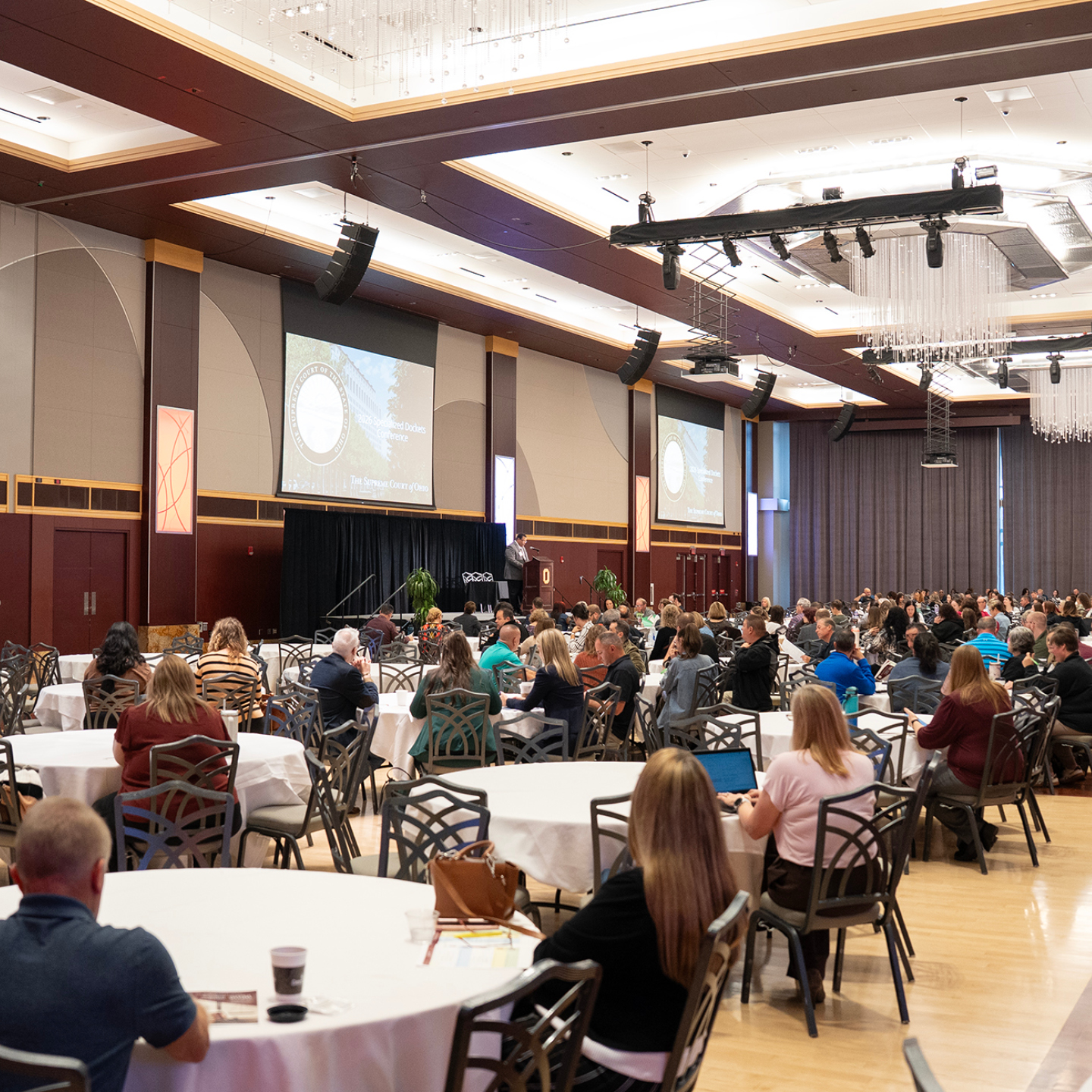
The Specialized Dockets Conference brought together community-focused participants.
Linda Davis was a judge in Macomb County, Michigan, when she heard a shocking confession. It came from her daughter late one night, who was admitting a heroin addiction. Then-Judge Davis immediately contacted the treatment programs where she had been sending the people who appeared before her in court.
The experience gave her the realization of how broken the system was and how much she wanted to help.
“When I took my daughter to the hospital for them to detox her, they were not looking at her as a sick person. They were looking at her as a bad person,” Davis said.
Her daughter’s confession came two decades ago. Since then, Davis has become an advocate for better treatment through the use of specialized dockets. She told her story during the opening session of the Supreme Court of Ohio’s annual Specialized Dockets Conference. This fall’s event drew more than 650 in-person and virtual attendees.
Davis left the bench and is currently the director of Face Addiction Now, which has helped place more than 140,000 people into treatment. The program partners with courts throughout Michigan and has a 76% success rate of keeping people sober 18 months after beginning treatment.
Similar specialized dockets in Ohio aim to offer stable support for adults and juveniles involved in the justice system and who have substance use or mental health issues.
“Dockets seek to balance accountability and rehabilitation by targeting the root causes of criminal behavior,” said Chief Justice Sharon L. Kennedy while outlining the necessity of forward-focused specialized dockets.
The conference was centered around the importance of providing full community support to dismantle stigma around substance use disorders and encourage rehabilitation. Davis said stigma can cause community members to unfairly belittle people who have become addicted.
She urged listeners to understand that these people are trying to turn their lives around, and that this is helped by specialized dockets.
During breakout sessions held throughout the conference, attendees selected from 23 presentations covering a wide range of topics related to specialized dockets, including:
- Trauma-informed practices.
- Veteran treatment.
- Domestic violence and intimate partner violence.
- Reentry.
- Peer-led recovery.
Sessions featured judges, coordinators, clinicians, researchers, and peer supporters from courts and organizations across Ohio and beyond.
Looking Forward
Today, 68 out of Ohio’s 88 counties have at least one specialized docket. The Supreme Court has developed a “Specialized Dockets Drafting Guide” and Certification Procedures and Information page with multiple resources about establishing specialized dockets and obtaining Court certification. The Court has also developed three videos about reentry:
- Reentry Stigma Public Service Announcement.
- Reentry Path Forward for Those Incarcerated.
- Judicial Branch Reentry Court Video.
The videos are tools for education, inspiration, and action, in support of broad goals to reduce recidivism and improve reentry outcomes.
Specialized dockets in Ohio have a remarkable impact:
- 251 specialized dockets, including 101 focusing on substance abuse.
- 5,862 adults and 499 juveniles currently participating in the dockets.
- 61% average graduation rate.
Specialized dockets can have an even greater impact with the help of judges in lower courts. Chief Justice Kennedy encouraged courts to consider developing specialized dockets to improve the outcome of courtroom proceedings.
“Think it, dream it, make it real, and make it happen,” she said.
Want to have the good work of a specialized docket featured on Court News Ohio? Share news of the program or other events, initiatives, and announcements with Court News Ohio. Ideas can be submitted to CNO@sc.ohio.gov.