
Supreme Court Event Reminds Aspiring Lawyers to Prioritize Well-Being
The importance of finding mentors and utilizing mental health resources was emphasized
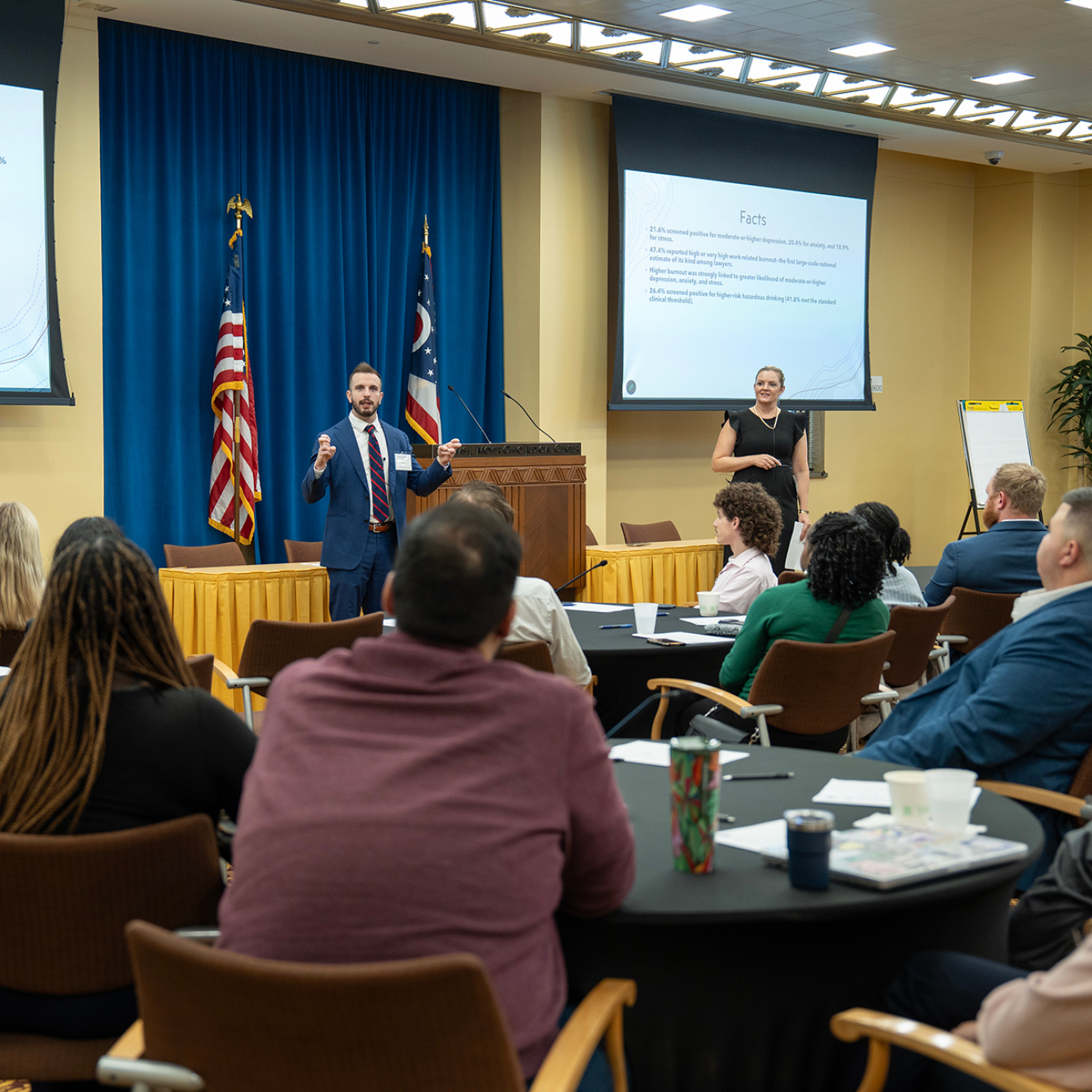
The Student to Lawyer Symposium inspires hope in law students.
“Who you are is more important than what you do, and to strive as a person and a practitioner, we have to remind ourselves of that sometimes,” Judge Christopher Epley told a gathering of new and experienced lawyers and law students.
Judge Epley of the Second District Court of Appeals opened the Supreme Court of Ohio’s 2026 Student to Lawyer Symposium by encouraging law students and lawyers alike that their worth isn’t defined solely by their job title. The event was presented by the Supreme Court’s Commission on Professionalism, which supports attorneys admitted to practice law in Ohio by hosting events directed at professional growth.
The theme of this year’s event – “The Whole Lawyer: Thriving as a Person and Practitioner” – focused on the impact of mental health on productivity inside and outside the workplace. Symposium speakers noted that the demands of the legal profession can be taxing, and it is important to remember that having a work-life balance and prioritizing mental health is crucial to performing the best professional work.
“Loving the work and being hurt by the work are not mutually exclusive,” reminded attorney Carley Kranstuber in her presentation, titled “Emotional Labor: Smile Like You Mean It.”
She emphasized how real burnout is and that there are resources to help. She described the effect of “emotional labor,” which she defined as “regulating or managing emotional expressions with others as part of one’s professional work role.” During her presentation, she reiterated the importance of leaning on colleagues and accepting support throughout a person’s career.
With an attentive audience, including students, professors, and administrators from eight of Ohio’s nine law schools, attendees shared the impact of knowing they can experience burnout without going through it alone. Topics allowed audience members to connect to the speakers by highlighting specific current and past mentors who shaped their career trajectories.
Mentoring Beyond the Symposium
“Find a mentor who exemplifies that someone like you can reach the highest level of success in the practice of law,” said attorneys Meghan Connolly and Austin LiPuma, whose presentation was titled “Mentorship in an Increasingly Isolating World.”
As each of the speakers suggested, there are multiple resources available to support both new and experienced lawyers. The Supreme Court offers resources to new lawyers in its Lawyer to Lawyer Mentoring program. Through nine hours of mentoring across six in-person meetings, the program links experienced attorneys with new lawyers who have recently been admitted to the practice of law.
Other resources include American Inns of Court, whose stated goal is to inspire the legal community to advance the rule of law; Ohio Lawyers Assistance Program, which strives to helps lawyers, judges, and law students cope with the stresses of the legal profession; and forming mentorships organically by finding lawyers you connect to outside of your firm.
At the end of the event, Judge Epley delivered a call to action.
“Let’s create a ripple effect,” he said. “Let’s share some of these ideas in our communities and our homes.”