
Conviction Upheld for Overdose Death Aided by Woman Who Helped Neighbor Buy Heroin
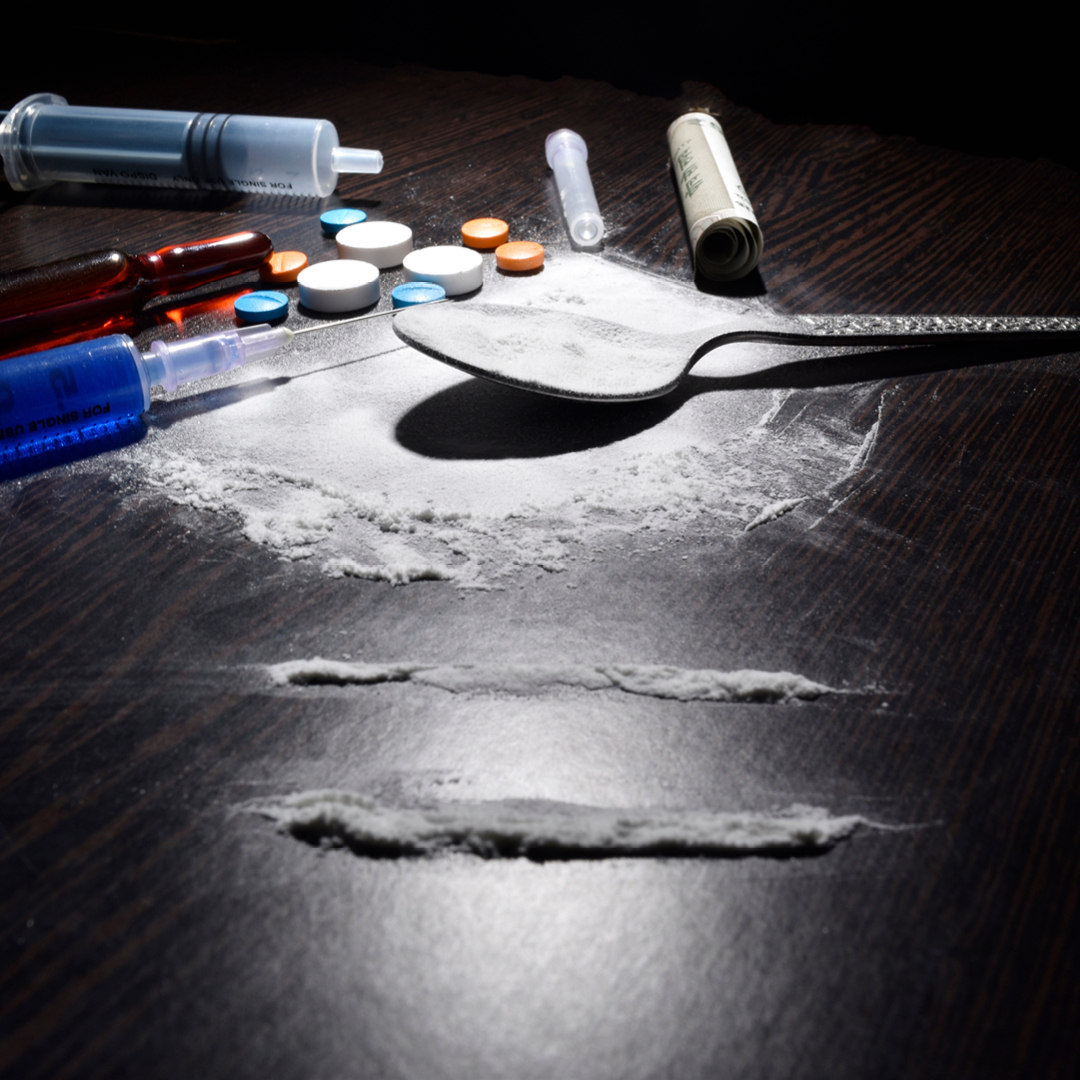
The Court reinstated the conviction of a woman who helped a friend purchase heroin that led to an overdose.
The conviction of a Franklin County woman who helped a friend purchase heroin will be reinstated, the Supreme Court of Ohio ruled today.
In a unanimous decision, the Supreme Court reinstated Carol Seymour’s convictions for involuntary manslaughter and corrupting another with drugs. In 2019, Seymour helped her Grove City neighbor, identified only as “Adam,” purchase $15 worth of heroin. Within hours of taking the heroin, Adam died in his bedroom.
Seymour successfully challenged her convictions on the two charges in the Tenth District Court of Appeals. That court found the prosecution had not introduced sufficient evidence to prove beyond a reasonable doubt that Seymour’s action had caused Adam’s death. At her trial, a pathologist testified that heroin could have possibly acted in concert with three other drugs in his system to cause the overdose.
Writing for the Court, Justice Daniel R. Hawkins stated that while the direct evidence of Adam’s cause of death was unclear, the Tenth District turned a “blind eye” to the circumstantial evidence, which the trial court considered when convicting Seymour.
“Heroin was the most dangerous of the four drugs Adam took, and the evidence overwhelmingly suggested that it was responsible for the overdose,” Justice Hawkins wrote. “Specifically, the evidence showed that Adam, whose body had tolerated the other less dangerous drugs for some time, ingested heroin, a drug that he had avoided for years, and was dead within an hour.”
Mix of Drugs Found in Deceased Man’s System
Adam lived at his mother’s home, and Seymour was a neighbor. She was known in the community as a “go-between” who arranged drug deals for others in exchange for payment. She drove Adam to a drug dealer’s house, purchased heroin for him, and drove him back to his house.
Adam had a brief conversation with his mother before heading to his bedroom. About an hour later, his mother found him dead on the floor.
A forensic pathologist performed an autopsy and concluded Adam died from the acute effects of heroin and three other drugs. The pathologist found drugs commonly known as kratom, Ritalin or Focalin, and Benadryl in his system.
The Court noted that kratom is an over-the-counter drug sometimes used by drug addicts to mitigate heroin-withdrawal symptoms. Ritalin and Focalin are prescription medications that treat attention-deficit-hyperactivity disorder, and Benadryl is an over-the-counter medication with a sedative effect.
Seymour was charged with trafficking in drugs, involuntary manslaughter, and corrupting another with drugs. At her trial, the pathologist testified that the four drugs had a “synergistic effect,” meaning that they combined to make each other stronger. The pathologist stated that Adam stopped breathing because the drugs combined to slow down his respiratory and circulatory systems.
When asked if he could single out one drug that was more responsible than the others, the pathologist replied that he could not. He also could not say whether Adam would have lived had he not taken any one of the four drugs.
Seymour opted for a bench trial, and the trial judge found her guilty on all three counts. She was sentenced to four years in prison for the manslaughter and corruption charges and 10 months for trafficking in drugs. She did not appeal the trafficking charge.
In a 2-1 decision, the Tenth District vacated the convictions for involuntary manslaughter and corrupting with drugs. The Franklin County Prosecutor’s Office appealed to the Supreme Court.
Supreme Court Dismissed Alternative Theory
The Tenth District noted that the prosecutor’s office presented two theories to support upholding Seymour’s sentence. The office suggested the appeals court could find that the heroin Seymour supplied was a “but-for” cause of Adam’s death. Or, it could find that the heroin was a “substantial factor” in his death.
While the Tenth District rejected the substantial-factor theory, it found its decision conflicted with a Third District Court of Appeals decision. The Third District had ruled the substantial-factor approach can be used to decide the cause of an overdose when multiple drugs are found in the victim’s body.
Justice Hawkins explained that the Court initially agreed to consider whether the substantial-factor test could be used in Ohio when dealing with multiple drug overdoses. However, because Seymour’s case could be addressed by evaluating whether the heroin was a but-for cause of Adam’s death, the Court did not need to resolve the conflict or address the substantial-factor theory.
Supreme Court Analyzed Trial Evidence
The opinion explained that under R.C. 2903.04(A), to convict a person of involuntary manslaughter, the state must prove the victim’s death was “the proximate result of the offender committing or attempting to commit a felony.” One part of proving proximate result requires finding the offender actually caused the death.
The Court noted the traditional method to prove actual cause is the but-for test, where the trial court determines whether the harm would not have occurred but for the offender’s actions. In a case such as a stabbing, where the offender stabs the victim and the victim dies, it is clear that the victim would not have died but for the offender stabbing the victim, the opinion explained.
The Court noted confusion arises in cases, such as multiple drug overdoses, where multiple independent sources could have caused the death.
The Tenth District reversed Seymour’s conviction by concluding that no witness provided testimony that the heroin was the “but-for” cause of Adam’s overdose. In reaching that conclusion, the appeals court limited its review to the testimony and other direct evidence, but did not consider the circumstantial evidence provided, the opinion stated.
While the pathologist could not say with certainty which drug was the primary cause of Adam’s death, the pathologist did testify it is extremely rare to die from a Benadryl overdose, and very rare to die from a Ritalin overdose, the Court noted. The pathologist stated it is only “becoming more common” to die from a kratom overdose, but out of the four drugs, an overdose death is most common from heroin.
A toxicologist testified that Adam’s body contained a non-toxic amount of Benadryl, and a high but “therapeutic amount of Ritalin.” The toxicologist found a “high concentration” of kratom and an amount of heroin typical of a heroin-related overdose.
Adam’s mother testified that he had struggled with addiction and that months before his death he enrolled in drug counseling and started treatment to combat an opioid addiction. His sister testified that Adam had avoided heroin for two years prior to his death.
Logs of text messages indicated Adam’s mother regularly provided him with kratom and Ritalin, and that he regularly used Benadryl to help him sleep.
“Compared to his apparently regular use of these drugs, evidence indicated that prior to his death, Adam had avoided heroin for years,” the opinion stated.
A challenge to the sufficiency of the evidence used to convict a criminal defendant is “not an exercise in scientific certainty,” the opinion stated, but rather whether all the evidence submitted at trial, “when viewed in a light most favorable to the prosecution, could prove to a rational trier of fact the essential elements of the crimes beyond a reasonable doubt.”
Applying this standard, the Court stated it had no difficulty concluding the prosecution proved Seymour caused Adam’s death.
2024-1732 and 2024-1658. State v. Seymour, Slip Opinion No. 2026-Ohio-1249.
 View oral argument video of this case.
Please note: Opinion summaries are prepared by the Office of Public Information for the general public and news media. Opinion summaries are not prepared for every opinion, but only for noteworthy cases. Opinion summaries are not to be considered as official headnotes or syllabi of court opinions. The full text of this and other court opinions are available online.
 PDF files may be viewed, printed, and searched using the free Acrobat® Reader
 Acrobat Reader is a trademark of Adobe Systems Incorporated.