
City Cannot Be Sued for Woman’s Fatal Tripping Injury in Recreation Center Locker Room
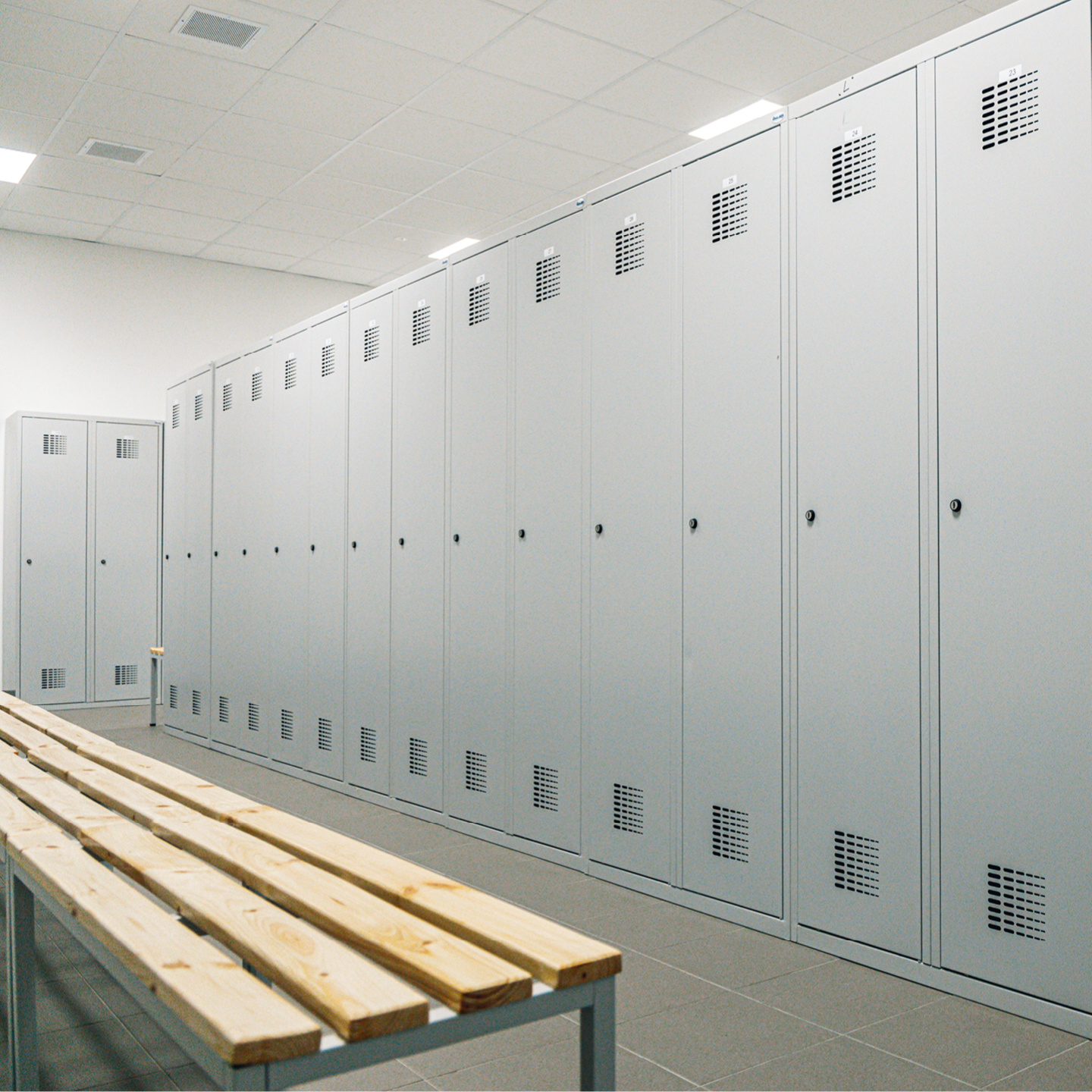
The city of Berea is not liable for the death of a senior citizen who tripped over the extended legs of a locker room bench.
A senior citizen died when tripping over the extended legs of a newly installed bench in Berea Recreation Center’s women’s locker room. The city is not liable for her death because the bench had no tangible imperfection and functioned as intended, the Supreme Court of Ohio ruled today.
A Supreme Court majority reversed an Eighth District Court of Appeals decision that would have allowed the estate of Joan Steigerwald to pursue a negligence lawsuit against Berea and the recreation center. The family claimed Berea was not immune from the suit because the placement of a bench with extended legs in a cramped locker room constituted a physical defect, which led to Steigerwald’s injuries.
Writing for the Court majority, Justice Megan E. Shanahan explained that the family equated the hazardous condition posed by the bench with a physical defect. However, state law removes immunity from a civil lawsuit for injuries or death caused by “physical defects within or on the grounds” of government facilities.
“The commonly understood meaning of a ‘physical defect’ is a tangible imperfection that impairs the function of an object. No evidence was presented showing that the recreation center’s locker-room bench had a physical defect under this ordinary meaning,” Justice Shanahan wrote.
Today’s decision follows an April Court ruling that found Cleveland was not liable for the drowning death of a swimmer because a lifeguard’s decision not to use a functioning elevated lifeguard chair was not a physical defect under Ohio law.
Justices R. Patrick DeWine, Joseph T. Deters, and Daniel R. Hawkins joined Justice Shanahan’s opinion. Chief Justice Sharon L. Kennedy also joined the opinion, citing the reasoning of her concurring opinion in the lifeguard chair case, Hoskins v. Cleveland. Justice Patrick F. Fischer concurred in judgment only.
In a dissenting opinion, Justice Jennifer Brunner maintained the majority more narrowly defined “physical defect” than what is contemplated under Ohio’s law granting immunity to political subdivisions. The law does not limit defects to objects themselves but can also apply to the government’s use of non-defective products that cause hazards. She noted the evidence in the case established that the prior bench did not have extended legs and that the Berea rec center received at least a dozen complaints prior to Steigerwald’s death that the extended legs on the new bench caused people to trip or stub their toes.
Swimmer’s Family Sues for Wrongful Death
In April 2018, Steigerwald was a regular participant in the senior swimming class at the rec center. She entered the women’s locker room and tripped over the legs of the newly installed bench. She sustained serious injuries and died 12 days later.
Her estate brought a negligence and wrongful death lawsuit in Cuyahoga Common Pleas Court against Berea, arguing its purchase of a bench with extended legs for placement in a narrow space in the locker room created a hazard that caused Steigerwald’s death.
Berea asked the trial court for summary judgment, maintaining it was entitled to immunity under R.C. 2744.02(A). The family maintained that Berea was not immune under an exception to the statute that generally prevents lawsuits against government bodies.
The estate cited R.C. 2744.02(B)(4), which holds the city can be liable for injuries and death caused by “the negligence of their employees and that occurs within or on the grounds of, and is due to physical defects within or on the grounds” of government buildings.
The trial court sided with Berea and dismissed the lawsuit. The family appealed to the Eighth District Court of Appeals. The Eighth District reversed the trial court’s decision and concluded that further proceedings were required to determine whether the placement of the extended leg bench in the locker room constituted a physical defect. Berea appealed the Eighth District’s decision to the Supreme Court.
Supreme Court Analyzed Physical Defect Requirement
Justice Shanahan explained that “physical defect” is not defined in the immunity statute, so the Court applied the plain and ordinary meaning of the word. Turning to several dictionary definitions, the opinion found that a “physical defect” is “a tangible imperfection that impairs the function of an object.”
The Court noted in its Hoskins decision that for the purpose of the immunity exception, a physical defect would include design flaws, damage, or deterioration. In that case, the lifeguard used a folding chair on the swimming pool deck rather than the elevated chair, which was functional but uncomfortable. The family of the swimmer who drowned argued the use of the low chair caused a “blind spot” and the lifeguard could not see that the swimmer needed assistance. The Court ruled the decision not to use the elevated chair was not a tangible imperfection and did not constitute a physical defect.
Today’s opinion noted that Berea’s recreation director selected the bench after evaluating more than a dozen models. The bench was chosen because it was antimicrobial, movable, suitable for locker rooms with condensation, and compatible with rec center cleaning equipment.
“The bench was not broken, unstable, or otherwise physically flawed and functioned as designed to provide seating for users of the recreation center,” the opinion noted.
The decision where to place the bench does not create a tangible imperfection, the Court stated. The law indicates the physical defect must be situated within or on the grounds of a building used in connection with a governmental function. An employee’s decision regarding where to place an object does not convert the placement decision into a physical defect, the opinion noted.
“An object may present a risk of injury and yet remain free of physical defect. R.C. 2744.02(B)(4) limits liability to harms caused by tangible imperfections, not all unsafe conditions,” the opinion stated.
The Court noted that, consistent with its holding in Hoskins, a discretionary decision involving otherwise functional equipment does not convert that equipment into a physical defect. Berea’s decision to place a structurally sound bench in the locker room did not make the city liable for the accident, the Court concluded.
The Court remanded the case for the trial court to enter summary judgment in favor of Berea.
Defect Broader Than Just Object’s Condition, Dissent Maintained
In her dissent, Justice Brunner wrote the majority’s “overly narrow definition” of “physical defect” is inconsistent with R.C. 2744.02(B)(4). She stated that nothing in the law limits “physical defect” to the flaws of a discrete object. The dissent noted other cases in which perfectly functioning objects, such as an auditorium orchestra pit, could constitute a physical defect because of the absence of lights and reflective tape around it, or gymnasium bleachers improperly set up by school employees.
The statute requires the trial court to determine if the bench’s placement in the locker room was negligent because the extended legs became a tripping hazard in a cramped space, Justice Brunner wrote. Based on the evidence that the rec center received several complaints about the bench, the trial court should not have granted Berea summary judgment and should have allowed Steigerwald’s estate to argue that the bench’s placement was a physical defect, the dissent concluded.
2024-1077. Steigerwald v. Berea, Slip Opinion No. 2026-Ohio-2554.
 View oral argument video of this case.
Please note: Opinion summaries are prepared by the Office of Public Information for the general public and news media. Opinion summaries are not prepared for every opinion, but only for noteworthy cases. Opinion summaries are not to be considered as official headnotes or syllabi of court opinions. The full text of this and other court opinions are available online.
 PDF files may be viewed, printed, and searched using the free Acrobat® Reader
 Acrobat Reader is a trademark of Adobe Systems Incorporated.