
Traffic Stop Unconstitutionally Prolonged for Canine Sniff
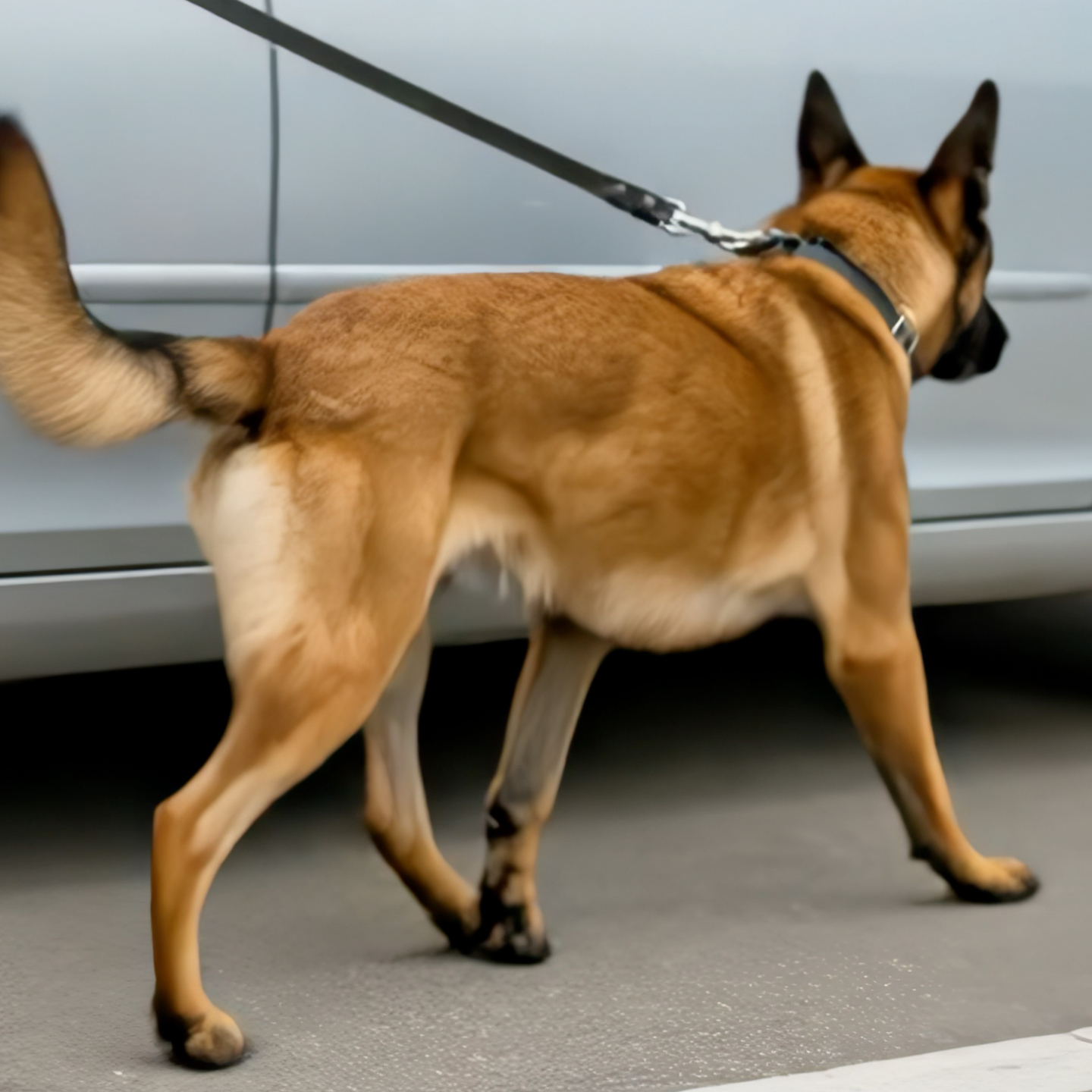
A driver’s constitutional rights were violated when a traffic stop was unreasonably extended to perform a canine sniff.
A Meigs County sheriff’s deputy violated a driver’s constitutional rights by unreasonably extending a traffic stop to perform a canine sniff, the Supreme Court of Ohio ruled today.
In a 6-1 decision, the Supreme Court reversed a judgment of the Fourth District Court of Appeals, which had determined that a 2019 traffic stop could be prolonged by five to 10 minutes for another officer to arrive based on “officer safety” concerns. The Fourth District’s ruling had affirmed the convictions of John Kincaid.
Kincaid contested his convictions, arguing that the canine sniff and subsequent search, which led to the discovery of narcotics, were unconstitutional because the prosecution failed to provide evidence to justify extending the traffic stop.
Writing for the Court majority, Chief Justice Sharon L. Kennedy explained that the Court had agreed to consider whether officer safety concerns could justify extending the stop in order to conduct a canine sniff. She wrote that the U.S. Supreme Court’s 2015 Rodriguez v. United States decision does not create an exception that allows law enforcement to extend the seizure of a driver based on officer safety when the safety concern is not related to the mission of the traffic stop.
“Officer safety does not justify prolonging a stop for a canine sniff since a sniff is not part of a traffic stop’s mission,” she wrote. “This means that prolonging a traffic stop to ensure officer safety before conducting a canine sniff is unconstitutional, because prolonging the stop is not necessary to complete the ordinary inquiries incident to the stop.”
Chief Justice Kennedy also noted that the Meigs County Prosecutor’s Office changed its theory of why the stop was justified when it argued the case before the Supreme Court. The prosecutor contended that Deputy Tylun Campbell was still completing tasks related to the traffic stop when the canine alerted to the drugs in Kincaid’s car.
The Court majority stated that it is the prosecutor’s burden to prove the traffic stop tasks were still ongoing when the canine alerted to the presence of drugs, but there is no proof in the trial court record indicating Campbell was still completing traffic stop tasks at that time.
Justices Patrick F. Fischer, R. Patrick DeWine, Jennifer Brunner, Joseph T. Deters, and Daniel R. Hawkins joined Chief Justice Kennedy’s opinion.
In a dissenting opinion, Justice Megan E. Shanahan agreed that Rodriguez does not permit officers to prolong a traffic stop for a canine sniff based on officer-safety concerns. However, she concluded that Campbell’s testimony about the sequence of events, together with the brief wait for backup, permitted a reasonable inference that ordinary traffic-stop inquiries remained ongoing when the canine alerted. She would have upheld the stop and affirmed the Fourth District’s judgment.
“Based on that sequence of events and because of the brief duration of the wait, I would conclude that the record permits the reasonable inference that some ordinary traffic-stop inquiries remained ongoing when the canine alerted,” she stated.
Deputy Suspected Vehicle Contains Drugs
Campbell is a K-9 officer with the sheriff’s department. He observed a vehicle committing two marked-lane violations. Before pulling the vehicle over, Campbell ran a registration check of the license plate and learned the vehicle was registered to Kincaid. Campbell then commenced a traffic stop.
Campbell discovered that Kincaid was driving the car, and he had a passenger. Campbell later testified that he had not met Kincaid before but had seen him around and had “prior information” that Kincaid was trafficking drugs in Meigs County.
After telling Kincaid that he was stopped for two marked-lane violations, Campbell decided to conduct a canine sniff of the vehicle, and he radioed for another deputy to meet him. While waiting for the other deputy, Campbell asked a dispatcher to run a license check on Kincaid and his passenger. The dispatcher reported no outstanding warrants for either man.
When the second deputy arrived, Campbell retrieved his dog and commanded her to sniff. The dog alerted to the driver’s side front door. Campbell ordered the men out of the car and searched the vehicle, finding heroin and fentanyl in baggies under the driver’s seat along with money. Kincaid admitted he made the money from selling narcotics.
Driver Sought to Suppress Evidence
Kincaid was indicted for possession of heroin and fentanyl and trafficking in heroin and fentanyl. He asked the Meigs County Common Pleas Court to suppress the evidence discovered during the traffic stop. Among other things, he argued the extension of the stop to conduct a canine sniff was not supported by probable cause or reasonable suspicion.
During the suppression hearing, Campbell testified that his investigation of the marked-lane violations ended by the time he told Kincaid why he pulled him over, and he admitted he decided to conduct the canine sniff at that time. He said he made the decision based on prior information that Kincaid was selling drugs, but the prosecution did not produce the source of the information. Campbell also testified that there were logs to mark the events of the traffic stop by time, but no logs were introduced as evidence during the hearing.
Campbell stated that while waiting for the other deputy, he was “actively investigating” Kincaid and his passenger for drug trafficking by asking them whether they were in possession of narcotics. For officer safety reasons, he waited for the other deputy to arrive before conducting the canine sniff. He acknowledged he did not write Kincaid a ticket for the marked-lane violations.
The trial court denied the suppression motion, concluding that once Kincaid’s vehicle was stopped for a traffic violation, the driver could be detained long enough to complete the canine sniff. The judge found that the short duration of about five minutes was not an unreasonable delay in completing the initial purpose of the stop.
Kincaid pleaded no contest to the drug trafficking counts, and the other charges were dismissed. He was sentenced to three to four-and-a-half years in prison and ordered to forfeit the $1,570 found in his vehicle.
Kincaid appealed to the Fourth District. In a 2-1 decision, the Fourth District affirmed Kincaid’s conviction. The appeals court acknowledged that a person’s reputation or past record does not give law enforcement officers reasonable suspicion to shift a traffic stop into a drug investigation. However, the appeals court majority found that Campbell did not unreasonably extend the stop considering the need to ensure officer safety.
Kincaid appealed to the Supreme Court.
Supreme Court Analyzed Search and Seizure Requirements
Chief Justice Kennedy explained that the Fourth Amendment to the U.S. Constitution protects against unreasonable searches and seizures, and a traffic stop constitutes a seizure under the Fourth Amendment. She noted that the U.S. Supreme Court has refined over the years how to apply the Fourth Amendment to traffic stops, including the constitutionality of canine sniffs.
The U.S. Supreme Court addressed canine sniffs in its 2015 Rodriguez decision when it ruled that the permissible duration of a traffic stop is determined by the “mission” of the traffic stop. The seizure of the driver may be long enough to address the traffic violation that warranted the stop and to attend to related safety concerns. A traffic stop can become unlawful if it is prolonged beyond the time to reasonably complete the mission, the Court noted.
A traffic stop’s mission usually is more than issuing a traffic ticket, and it may include inquiries to check a driver’s license, determine if there are any outstanding warrants against the driver, inspect the vehicle registration, and verify proof of insurance, the opinion noted.
Officer safety can be invoked as a reason for prolonging the stop when conducting traffic stop functions, but a canine sniff is not a usual part of a traffic stop. To continue the stop to detect criminal wrongdoing, the officer must have reasonable suspicion of criminal activity.
The Court ruled that the Fourth District erred in holding that the canine sniff did not unreasonably prolong the traffic stop.
The opinion noted that the prosecution had changed its theory of the case when presenting it to the Supreme Court, arguing that Campbell was still performing administrative tasks associated with the traffic stop when the deputy arrived.
The Court indicated it was the prosecution’s burden at the suppression hearing to prove that the administrative tasks were still ongoing when the canine alerted to the drugs.
The opinion stated that Campbell did not testify that the administrative tasks were ongoing when the canine alerted, nor did he provide any testimony on the timing of when he received the results of the license checks from dispatch. He did not testify about how long it would have taken him to issue a warning or ticket.
“And this means the State failed to meet its burden. Therefore, we conclude that Kincaid’s Fourth Amendment rights were violated, and the remedy for that violation is suppressing the evidence discovered during the unlawful seizure,” the Court stated.
The Court remanded the case to the trial court for further proceedings.
Stop Was Constitutional, Dissent Maintained
In her dissent, Justice Shanahan explained that under Rodriguez, a traffic stop becomes unlawful when it extends beyond the time reasonably necessary to complete its mission. She agreed that officer safety could not independently justify prolonging the stop for a canine sniff but maintained that the evidence permitted a reasonable inference that ordinary traffic-stop inquiries remained ongoing when the canine alerted.
The dissent noted that Campbell requested backup and, while waiting approximately five to 10 minutes for the second deputy to arrive, conducted license checks through dispatch. Although Campbell did not testify when he received the results, she concluded that his testimony, the sequence of events, and the brief duration of the wait provided sufficient evidence to support an inference that the traffic-stop mission had not ended. She disagreed with the majority’s conclusion that the state failed to meet its burden of production, explaining that reasonable inferences may be drawn from direct evidence and that the state was not required to establish every fact through direct testimony. She also noted that the trial court’s findings concerning the brief wait for backup supported her conclusion. Accordingly, she would have affirmed the Fourth District’s judgment.
2024-1184. State v. Kincaid, Slip Opinion No. 2026-Ohio-4510.
 View oral argument video of this case.
Please note: Opinion summaries are prepared by the Office of Communications for the general public and news media. Opinion summaries are not prepared for every opinion, but only for noteworthy cases. Opinion summaries are not to be considered as official headnotes or syllabi of court opinions. The full text of this and other court opinions are available online.
 PDF files may be viewed, printed, and searched using the free Acrobat® Reader
Acrobat Reader is a trademark of Adobe Systems Incorporated.