
Supreme Court: Oral Arguments Include Landlord’s Responsibility for Dog Bite Injury
Seven cases are on the Court’s schedule for next week.
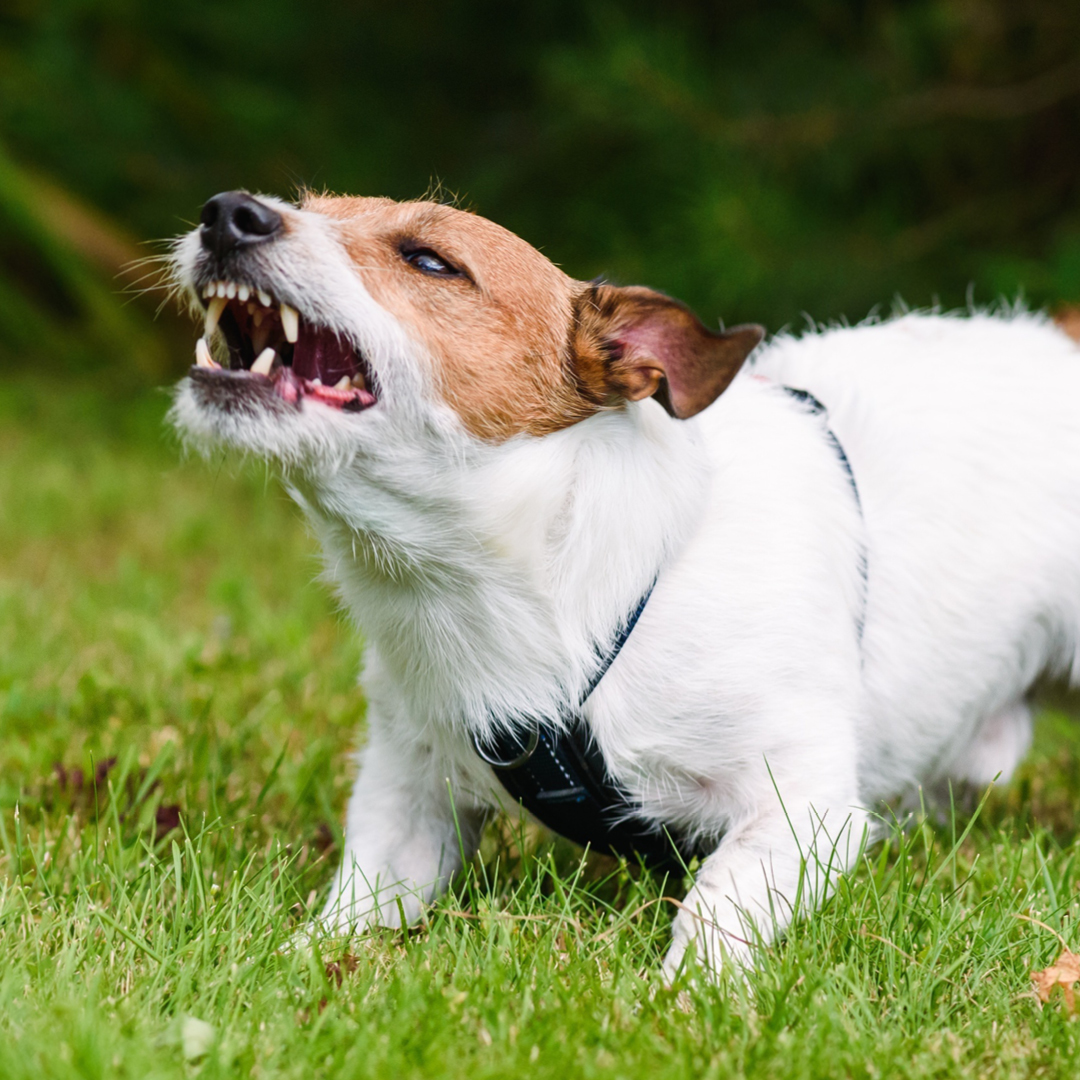
Court will consider whether landlord responsible for the injuries caused by a dog bite at a housing complex playground.
An owner of a manufactured housing complex in Montgomery County is contesting an attempt to be held financially responsible for the injuries suffered by a child who was bitten by a dog at the complex's playground. During oral arguments next week, the Supreme Court of Ohio will consider whether state law considers the property owner to be a “harborer” of the dog and responsible for its behavior.
The case is one of seven the Supreme Court will hear when it meets on Dec. 9 and 10 in Columbus. Arguments can be watched live by streaming online at SupremeCourt.Ohio.gov and on the Ohio Channel, beginning at 9 a.m. each day. The Ohio Channel also archives the oral arguments. Detailed case previews from the Office of Public Information are available by clicking on the case names throughout the article or in the list of cases in the sidebar.
Tenant Claims Landlord Liable for Dog Bite Injury
In 2020, a woman and her 11-year-old son lived in the Oakwood Village community. The property owners required all dogs to be on a leash in common areas and also had a list of restricted breeds that tenants were not permitted to own. The boy went to one of the playgrounds and saw that another resident had their family’s cocker spaniel at the playground and the dog was on a leash tied to a swing set. The boy patted the dog on the head, and the dog bit the boy on the scalp and face, requiring an emergency room visit and 50 stitches.
The injured boy’s mother filed a lawsuit against the pet owner and Oakwood Village. The lawsuit claimed that under R.C. 955.28(B), the landlord was responsible for the injuries as a “harborer” of the dog. A trial court granted the landlord summary judgment, finding the property owner couldn’t be held liable for the injuries. In a 2-1 decision, an appeals court reversed the decision.
In Hipshire v. Oakwood Village, the mother argues the appeals court correctly applied a standard used in Ohio courts in which a harborer is one who exercises control over the premises where the attack occurred and allows for the dog’s presence. Because Oakwood Village has exclusive control of the playground and sets the rules for dogs on its premises, it was a harborer of the cocker spaniel and responsible for the injuries, the mother asserts.
Oakwood Village suggests that silent acquiescence, in which a landlord allows a dog to be kept by a tenant and to use the common areas, is a component of being a harborer, but is not the sole factor. In cases where the landowner is held responsible for a dog bite injury, the law requires active control of the dog, the landlord asserts. In most cases where a landlord or landowner was found liable, the dog was owned by a family member, friend, or neighbor, and the landlord was familiar with the dog. Oakwood Village argues it isn’t liable for injuries caused by the dogs of its tenants.
Appeals of Foreclosures
A foreclosure was ordered against a 73-year-old woman for a Highland Heights property. While her appeal of the foreclosure was pending, the home was sold to a third party. The trial court agreed to place a stay on the sale if the homeowner posted a bond of about $473,000 but she didn’t post it. The sale went through, and the funds were disbursed. In Wells Fargo Bank v. Doberdruk, the homeowner maintains that a state law requires payment of restitution if she wins an appeal after the home sale and the distribution of the proceeds. The bank counters that the homeowner must post the bond to preserve the possibility of restitution. The case involves a conflict among Ohio appellate courts on the issue.
Delayed Appeals for Victims
A property owner in Cleveland reported a break-in and the theft of personal items in 2017. At the sentencing hearing for the defendant, the property owner requested restitution for the stolen items. The trial court didn’t address the request. In 2023, the General Assembly passed laws implementing aspects of Marsy’s Law, the state constitutional amendment protecting victim rights. The property owner asked a state appeals court for “leave,” or permission, to file a delayed appeal based on one of the new laws that guaranteed hearings for victims in a certain time period. In State v. Barnes, the property owner contends that victims, not just defendants, should be entitled to ask to file a delayed appeal. The offender responds that the rules for appeals only allow defendants to seek delayed appeals.
Audit of Jointly Owned Power Plant
Three Ohio utilities own about 34% of Ohio Valley Electric Corporation (OVEC). In 2019, state lawmakers passed House Bill 6, which created a single legacy generation resource rider. Each of the three Ohio companies uses the rider to pass on the costs of operating OVEC to their customers. The bill required the rider to be audited in 2020, and based on the audit, state utility regulators allowed the companies to pass on $115 million in costs that opponents believe should be paid by the companies. In In re OVEC Generation Purchase Rider Audit, the Court will consider whether the charges meet the standard of being prudent and reasonable, allowing them to be charged to customers.
Analysis of Cumulative Errors
After shootings in Youngstown in 2018, a man was convicted of murder, attempted murder, and other offenses. On appeal, he questioned a three-year delay by the prosecutor in turning over DNA evidence. He also challenged a trial court decision to not provide more preparation time to the defense before interviewing jurors about the impact of one juror sharing that she thought she was followed the night before the verdicts were decided. The appeals court granted the man a new trial based on cumulative errors. In State v. Knight, the special prosecutor argues that the cumulative error analysis depends on errors made during trial, but neither of these alleged errors occurred during the trial. The man asserts that fair trial rights encompass mistakes made throughout the criminal process.
Vehicle Stop and Search
In January 2023, Parma police received a report of an armed robbery. A witness saw the suspects leave in a tan or gold minivan and thought the license plate number started with TWL. The next evening, a Parma police officer, who heard about but wasn’t investigating the armed robbery, spotted a minivan with heavily tinted windows and pulled the driver over. While walking up to the minivan, the officer noted it was blue or silver in color, and the license plate started with JWL. He told the driver he stopped him because the minivan matched one suspected of being involved in an armed robbery. After the driver rolled the windows down, another investigating officer smelled marijuana. The officer who stopped the driver then removed the driver from the van and searched him, finding a gun. The driver was indicted on three weapon-related charges and sought to suppress the evidence, arguing the search was illegal. In State v. Mathis, the Court will consider whether the officer could continue his search once he learned the van wasn’t the one suspected of being used in the robbery.
Audits of Utility’s Coal Plant Rider
In 2016, state utility regulators ordered annual audits of a power purchase agreement rider authorized for AEP Ohio. The company is part owner of two coal plants – one in Ohio, and one in Indiana – operated by the Ohio Valley Electric Corporation. The rider allows AEP Ohio to charge or credit its customers based on revenue or costs of electricity sold from the plants. State regulators approved audit reports regarding the rider for 2018 and 2019. The Office of the Ohio Consumers’ Counsel and Ohio Manufacturers Association Energy Group have challenged the audit reports in In re review of power purchase agreement riders of Ohio Power Company for 2018 and 2019. The groups contest whether the riders are prudent and in the best interest of customers. An email regarding a draft audit report indicated that keeping the plants running wasn’t in the customers’ best interests, and the regulators improperly influenced the auditors by asking them to change the conclusion, the groups maintain. The regulator and the company counter that ample evidence supported the rider.